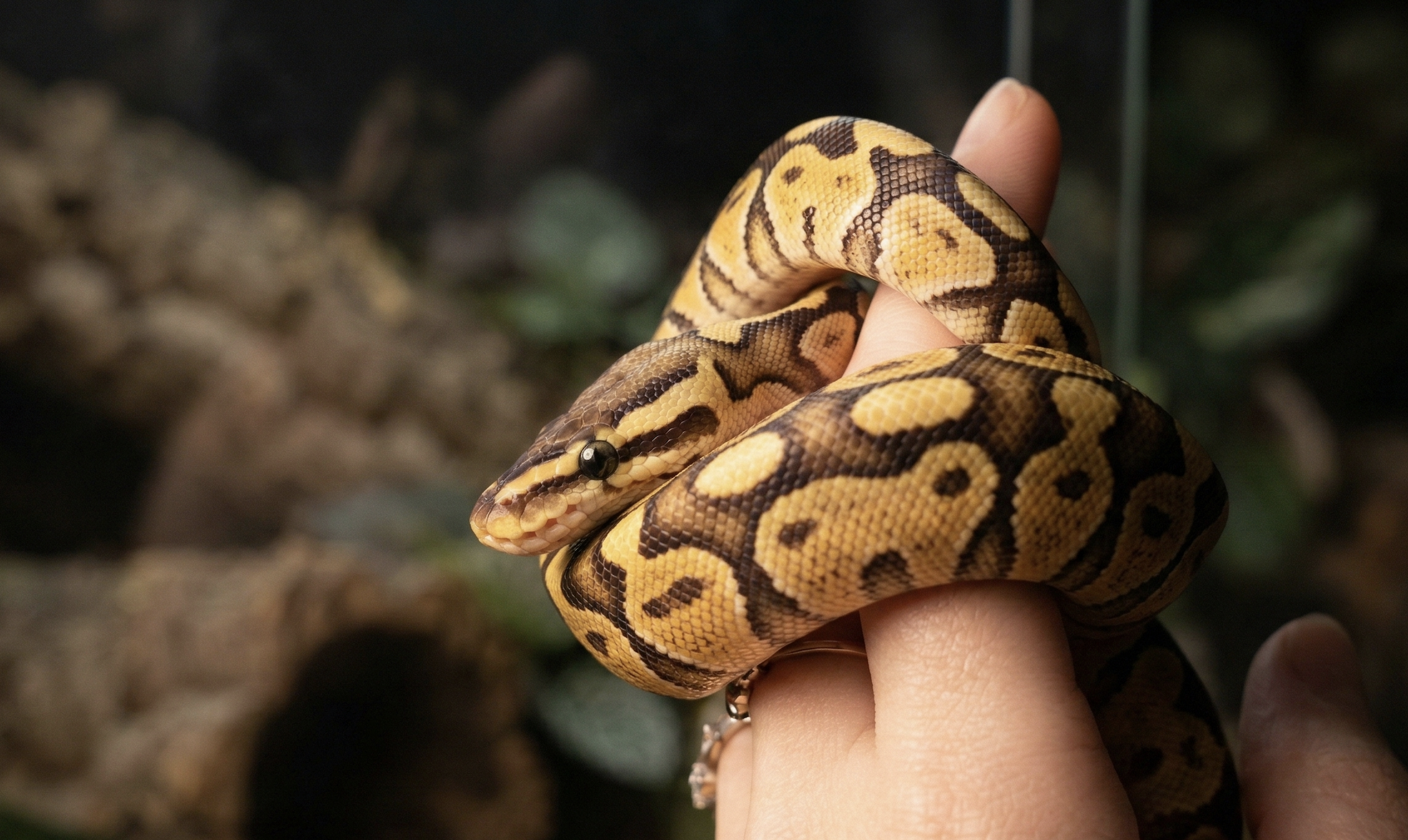
A few years ago, if you had said the words “Pastel,” “Mojave,” and “Piebald” to me, I would have assumed you were talking about paint swatches. The only thing I associated with snakes was fear. As a lifelong ophidiophobe, the idea of even looking at one, let alone appreciating its patterns, was unthinkable. My journey started with a single moment of terror and triumph—touching a Kenyan boa. But my fascination truly began when I first stumbled upon the world of ball python morphs. I didn’t just see a snake anymore, I saw living art. I saw the incredible genetic tapestry that could create a canvas of brilliant yellows, stark whites, and deep blacks.
Learning about morphs was a key part of my healing. It retrained my brain to see beauty where it once saw only fear. Now, as I get ready to have my own first snake, this world of “morphs” isn’t just a fun collector’s hobby. It’s a testament to how amazing these creatures are. It’s also a personal reminder that sometimes, the most beautiful things are waiting on the other side of our greatest fears.
What does Ball Python Morph mean?
Ball pythons (Python regius) are incredibly popular pet snakes, loved for their calm nature and easy-to-manage size. But what really makes them stand out is the amazing variety of colors and patterns they come in, known as morphs. Breeders have selectively created thousands of different morphs, making ball pythons a favorite among reptile fans. In the world of reptile keeping, a morph is simply a genetic change that gives a snake a different look than its wild counterpart. These changes can alter its color, pattern, or even the texture of its scales. Ball python morphs are created by breeding snakes with specific traits to get offspring with unique appearances.
Most Popular Ball Python Morphs for Beginners
With so many morphs out there, it can be tough to pick just one! Here are a few of the most popular and striking ones:
- The Normal ball python morph is the standard, wild-type ball python. It features dark brown or black blotches on a lighter brown background.
- The Albino is one of the oldest and most eye-catching morphs. It lacks dark pigment. This gives it bright yellow and white scales with pink or red eyes.
- The Banana morph boasts a vibrant yellow color, often with dark spots that become more noticeable as the snake gets older.
- Piebald ball python morph has distinct patches of white mixed with their normal colors, creating a really cool, high-contrast look.
- The Spider ball python morph has a unique pattern of thin, web-like lines, though it’s worth noting this morph is often linked to a neurological condition called “wobble syndrome.
- Enchi ball python morphs are known for their richer colors and bolder patterns, often showing off brighter yellows, oranges, and browns.
Coiled Comfort: Their Temperament
So, what’s it like to actually hang out with a ball python? Well, they’re not exactly known for playing fetch. These snakes are famously docile, which is a fancy way of saying they prefer to chill out. They’ll often coil up into a tight “ball” (hence the name!) when they feel shy or curious, making them pretty easy to handle. Don’t expect dramatic tantrums. Instead, a ball python’s idea of a protest is usually just being a ball for a bit longer. They’re more about quiet observation than demanding attention, making them perfect for those who appreciate a pet with a laid-back, “no drama” policy.
Dinner Time: What do Ball Pythons eat?
When it comes to meals, ball pythons are quite straightforward carnivores. Their diet primarily consists of rodents, like mice or small rats, that are ideally offered pre-killed (frozen/thawed) for safety. The size of the prey should match the widest part of your snake’s body. They’re typically fed every 7-14 days, depending on their age and size. Think of it as a weekly (or bi-weekly) feast for your little coiled friend – no picky eaters here, usually!
What Makes Ball Pythons So Popular?
Ball pythons are incredibly popular pet snakes, loved for their calm nature and easy-to-manage size. But what really makes them stand out is the amazing variety of colors and patterns they come in, known as morphs. Breeders have selectively created thousands of different morphs, making ball pythons a favorite among reptile fans.
Choosing Your Ball Python Morph
When picking a ball python morph, think about what you like best and what your budget allows. Some morphs are common and affordable, while others are quite rare and can be expensive. Always do your homework on any morph you’re considering, as some might have specific care needs.
Ball Python Morphs FAQ
A ball python morph refers to a genetic variation that produces unique colors, patterns, or scale textures in captive snakes. Selective breeding combines specific traits across generations. Thousands of morph combinations now exist, ranging from common variations to ultra-rare designer combinations.
The Normal, Pastel, and Banana ball python morphs work best for beginners due to their stable genetics and reasonable prices. These morphs lack the neurological issues found in some designer combinations. Avoid Spider-line morphs as a first snake due to wobble syndrome.
Wobble syndrome is a neurological condition linked to the Spider ball python morph and several related genetic combinations. Affected snakes show head tremors, balance issues, and corkscrewing movements. Severity varies between individuals, but the condition cannot be reversed once the morph expresses it.
A ball python morph costs anywhere from $50 for Normal coloration to $20,000 for ultra-rare designer combinations. Common morphs like Pastel or Banana fall between $100 and $300. Rarity, breeder reputation, and visual quality drive the dramatic price differences in the morph market.
A ball python eats appropriately sized rodents, primarily mice or small rats matching the snake’s body width. Pre-killed frozen-thawed prey eliminates injury risk during feeding. Adult feeding intervals fall between 7 and 14 days depending on age, body condition, and seasonal appetite changes.
Ball pythons rank as the top beginner snake species due to docile temperament and manageable adult size. They tolerate handling, eat reliably, and adapt to standard reptile husbandry. Lifespan reaches 30 years in captivity, requiring long-term commitment from new keepers.
Ball python morphs gained popularity through their stunning visual variety paired with the species’s docile nature. Breeders have developed thousands of color and pattern combinations through selective breeding programs. Each morph carries individual market value, fueling a thriving collector hobby and breeder community.
The rarest ball python morphs include Sunset, Stranger, and Monsoon, which can sell for tens of thousands of dollars. Rarity depends on the number of breeding gene copies required and current market demand. Newly proven morphs command premium prices until breeding stock spreads.
Sources
- World of Ball Pythons
https://www.worldofballpythons.com/morphs/ - Journal of Exotic Pet Medicine
https://www.sciencedirect.com/science/article/abs/pii/S155750631400007X - Reptiles Magazine
https://reptilesmagazine.com/ball-python-care-sheet/ - San Diego Zoo Wildlife Alliance
https://ielc.libguides.com/sdzwa/factsheets/ballpython - Morphpedia
https://www.morphmarket.com/morphpedia/ball-pythons/banana/
Leave a Reply
You must be logged in to post a comment.