
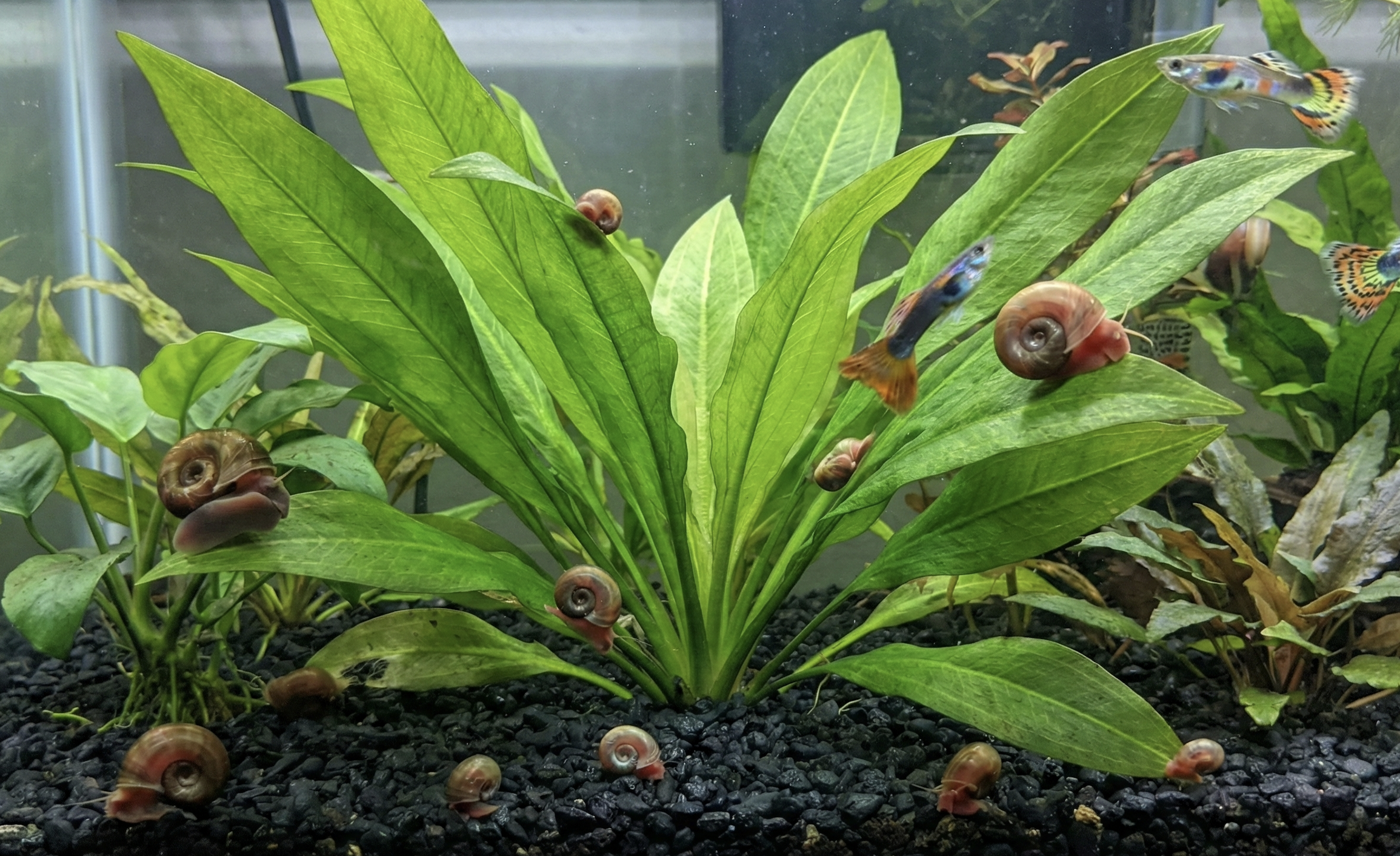
Like many aquarists, my first Ramshorn Snails were not a deliberate choice, but uninvited guests that hitchhiked in on a new plant. I saw the tell-tale gelatinous egg sacs and the tiny, coiled shells, and I sighed, preparing for the “pest snail” battle. For a while, that’s all they were—little brown specks to be removed.
But then, one day at a local fish store, I saw a tank filled not with drab brown snails, but with vibrant, beautiful creatures—snails with shells the color of deep red coral and brilliant sapphire blue. They were Ramshorns, deliberately bred for their beauty. It completely changed my perspective. I realized these snails weren’t just a nuisance; they could be a choice, a living jewel that also happens to be one of the most effective cleaning crews you could ask for.
The Ramshorn Snail (Planorbidae family) has a dual identity in the aquarium hobby. For some, it’s an infestation; for others, it’s a beautiful and functional pet. The truth is, it’s all about management and perspective.
Introduction to Ramshorn Snails
Are Ramshorn Snails considered a pest species?
Many hobbyists incorrectly label these animals as pests due to their rapid breeding cycles. Specifically, they are highly efficient ecological indicators for your aquarium. Furthermore, their population size reflects the amount of waste in your water. Consequently, a surge in numbers suggests that you are providing too much food. Therefore, these snails function as a biological alarm system. In fact, they are helpful cleaners that consume unsightly algae and biofilm. As a result, they improve the overall hygiene of your aquatic environment.
Identifying the Species
How do Ramshorn Snails differ from other common aquarium snails?
The flat, coiled shell is the most defining feature of this specific species. Specifically, the shell resembles a ram’s horn because it grows in a flat plane. Furthermore, this shape is distinct from the cone-shaped shells found on Bladder or Pond snails. Consequently, you can easily identify them during a visual tank audit. Therefore, the unique spiral adds a geometric aesthetic to your aquascape. In fact, they move gracefully across glass and decor using a broad foot. As a result, they are visually appealing residents for any community tank.
Ramshorn Snails Population Control
How do I control the population?
The primary rule of snail management is to limit the available food supply. Specifically, you must reduce your feeding frequency to stabilize their growth. Furthermore, fewer leftovers mean the snails have less energy for reproduction. Consequently, their numbers will naturally decline without the use of toxic chemicals. Therefore, manual removal using a vegetable trap is a safe secondary option. In fact, Assassin Snails or Pufferfish are excellent natural predators for this species. As a result, you can maintain a balanced ecosystem through proper nutrient management.
Understanding Ramshorn Snails Feeding Habits
Do Ramshorn Snails eat healthy live plants?
These gastropods generally ignore healthy vegetation in favor of decaying organic matter. Specifically, they prefer to consume “melting” leaves, algae, and fish waste. Furthermore, they act as a precision pruning crew for your aquatic garden. However, they may nibble on soft-tissue plants if they are starving. Consequently, you should provide occasional algae wafers to keep them satisfied. Therefore, your healthy plants remain safe in a well-fed tank. In fact, their presence prevents waste from fouling the water column.
Respiratory and Reproductive Biology
How do Ramshorn Snails breathe and reproduce?
This species possesses a lung-like organ that allows it to breathe atmospheric air. Specifically, they are pulmonate snails that frequently travel to the water surface. Furthermore, they carry both reproductive sexes. Consequently, they can reproduce prolifically even in small groups. Therefore, they lay gelatinous egg clutches on hard surfaces like glass or wood. In fact, these eggs are often transparent and difficult to spot. As a result, they are highly successful at colonizing new environments.
Variety and Lifespan
What are the different color varieties and lifespans of Ramshorn Snails?
Breeders have successfully developed stunning color varieties including red, blue, gold, and pink. Specifically, the red variety is the most common and features a translucent shell. Furthermore, these snails typically reach a maximum size of one inch in diameter. Consequently, their lifespan usually ranges from one to two years in captivity. Therefore, they provide a colorful and active presence during their life cycle. In fact, the blue morph is highly prized for its metallic sheen. As a result, they are popular among ornamental shrimp keepers.
Ramshorn Snails FAQ
Reduce feeding — this is the single most effective method. Ramshorn Snails only reproduce to the capacity of their available food supply. Fewer leftovers mean less energy for reproduction and their numbers will naturally decline. Manual removal using a vegetable trap at night is a safe secondary option. Never use copper-based anti-snail chemicals — they are lethal to all invertebrates.
Generally no — they strongly prefer decaying leaves, algae, and fish waste over healthy plant tissue. However, they may nibble soft-tissue plants if they are starving. Providing occasional algae wafers keeps them well-fed and your healthy plants safe.
Breeders have developed red, blue, gold, and pink varieties. The red is the most common and features a translucent shell. The blue morph is the most prized for its metallic sheen and is popular among ornamental shrimp keepers. All colour varieties share identical care requirements.
They carry both male and female reproductive organs, meaning even a small group can reproduce prolifically. They lay transparent, gelatinous egg clutches on hard surfaces like glass, wood, and rocks — often difficult to spot until hatching. A single snail introduced on a new plant is enough to start a colony.
No — a population surge simply means the tank is being overfed. Their numbers directly reflect the nutrient load in your water, making them a biological alarm system rather than a pest. They consume algae, biofilm, and decaying matter, and their waste provides localized fertilizer for plant roots.
Sources
- Seriously Fish
https://www.seriouslyfish.com/invertebrates/ - Aquarium Source
https://www.aquariumsource.com/ramshorn-snail/ - Aquarium Care
https://www.aquariumcarebasics.com/freshwater-snails/ramshorn-snails/
Leave a Reply
You must be logged in to post a comment.