

The Oscars (Astronotus ocellatus) are among the most charismatic and intelligent freshwater fish available in the hobby. Specifically, their interactive nature is legendary among researchers and hobbyists alike. Furthermore, this incredible personality necessitates a massive tank and a significant nutritional commitment. In fact, their metabolic waste production requires industrial-grade filtration systems. Consequently, I reject the assumption that they are simple community fish. Therefore, this guide provides the technical precision required for their successful stewardship.
Are Oscars good pets for beginners?
No, Oscars are strictly an expert-level commitment that require significant technical infrastructure. Specifically, their massive waste production will quickly overwhelm a novice keeper with a small tank. Furthermore, their territorial nature makes them a danger to standard community residents. In fact, the filtration required to handle their bioload is often more expensive than the fish. Consequently, a beginner will likely face environmental collapse within the first year. Therefore, I prioritize experienced owners for their survival.
How long do Oscars live and how large do they get?
Oscars represent long-term commitment of ten to fifteen years in a stable environment. Specifically, they grow at an accelerated rate and reach an impressive adult size of twelve to fourteen inches. Furthermore, do not be fooled by the two-inch juveniles found in pet stores. In fact, stunting their growth in small tanks leads to permanent internal organ damage. Consequently, you must plan for a foot-long fish before making a purchase. Therefore, I recommend planning for a decade of care.
What is the temperament of Oscars?
Their temperament is best described as intelligently moody and highly territorial. Specifically, they will see their entire aquarium as their personal domain. Furthermore, they are powerful predators that will dominate any fish that challenges their space. In fact, they are not pointlessly mean, but they are opportunistic hunters. Consequently, they will consume any tank mate small enough to swallow. Therefore, I recommend a solitary setup or very large systems for social harmony.
Do Oscars bond with their owners?
Profound bonding with their owners is the single greatest appeal of this species. Specifically, they quickly learn to recognize individual human faces and follow movements around the room. Furthermore, they will swim to the front of the tank to beg for food with theatrical displays. In fact, their interactive nature has earned them the analytical nickname “water dogs.” Consequently, they require social stimulation to prevent behavioral lethargy. Therefore, I recommend consistent interaction to support their complex mental well-being.
Do Oscars get lonely or bored?
It is analytically more accurate to say that they suffer from extreme boredom. Specifically, an individual left in a barren tank without stimulation can become lethargic and depressed. Furthermore, they may lie on their sides and refuse to eat as a response to environmental under-stimulation. In fact, they require complex hardscapes to explore and interact with. Consequently, lack of enrichment leads to visible physical and behavioral decline. Therefore, I prioritize a dynamic environment to maintain their health.
Do Oscars bite their keepers?
Yes, they possess strong jaws and can deliver a surprising and painful bite. Specifically, they may mistake a finger for food during active feeding times. Furthermore, they can bite defensively if they feel their territory is being threatened. In fact, their teeth are designed for crushing and can break the skin. Consequently, you must exercise caution during maintenance tasks. Therefore, I recommend using a divider or feeding them in a different area during tank cleaning.
What is the minimum tank size and proper setup?
A 75-gallon tank is the absolute analytical minimum for a single adult specimen. Specifically, a 125-gallon system is much more appropriate to manage their significant bioload. Furthermore, a pair or a community attempt requires a tank of 180 gallons or larger. In fact, restricted volumes lead to high nitrate levels and chronic stress. Consequently, you must prioritize horizontal footprint over vertical height. Therefore, I recommend a six-foot-long tank for adult specimens.
What is the best substrate and decor for Oscars?
Soft sand or fine, smooth gravel is the only appropriate substrate for their health. Specifically, they are famous “excavators” that spend hours re-sculpting their environment. Furthermore, sharp gravel can injure their mouths and lead to secondary infections. In fact, they will move and pile substrate to suit their territorial needs. Consequently, you must ensure all rock structures are stable and placed on the tank bottom. Therefore, I recommend using heavy driftwood to prevent them from moving decorations.
What type of filtration is needed?
Overkill is the primary goal when designing a filtration system for this messy species. Specifically, a large canister filter rated for twice your tank size is a mandatory requirement. Furthermore, they produce an enormous amount of metabolic waste and uneaten food debris. In fact, insufficient filtration leads to rapid ammonia spikes and environmental collapse. Consequently, high-flow mechanical and biological filtration is necessary. Therefore, I prioritize oversized sump systems or dual canister filters for their survival.
Are Oscars safe for planted tanks?
Absolutely not, because Oscars view a planted tank as a personal landscaping project. Specifically, they will uproot, shred, and consume almost any plant you provide. Furthermore, their digging behavior ensures that no rooted plant remains secure for long. In fact, only tough epiphytes like large Anubias securely attached to boulders have a chance. Consequently, a planted Oscar tank is a biological dream that ends in destruction. Therefore, I recommend focusing on a “hardscape-only” design for these fish.
What are the ideal water parameters?
Oscars require stable, clean, and warm water between 76°F and 82°F. Specifically, the pH should remain stable between 6.5 and 7.5. Furthermore, their waste production means that water quality can decline with extreme speed. In fact, they are highly susceptible to diseases caused by high nitrates. Consequently, pristine water is the only verified way to prevent Hole-in-the-Head disease. Therefore, I recommend weekly water changes of at least 50% without fail.
Types and Variations of Oscars
While the wild Oscar (Astronotus ocellatus) is a beautifully patterned fish, selective breeding has created several stunning variations. All have the same care requirements.
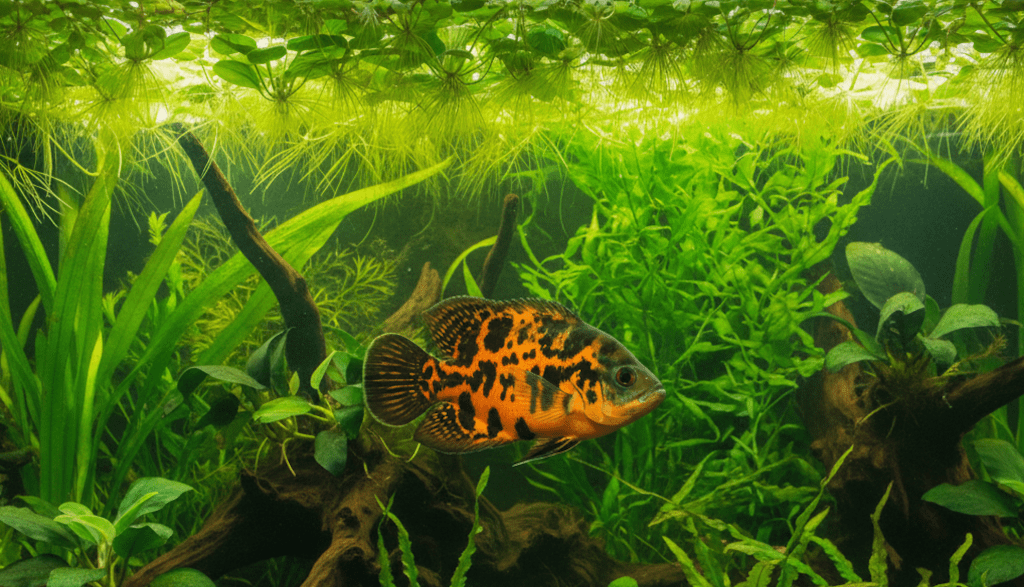
The classic, with a dark body covered in irregular orange or red patterns.

Features a solid, vibrant red-orange coloration over most of its body.

A white or yellowish-white body with bright orange or red patterning.

A rarer variety with a bright yellow body instead of orange.
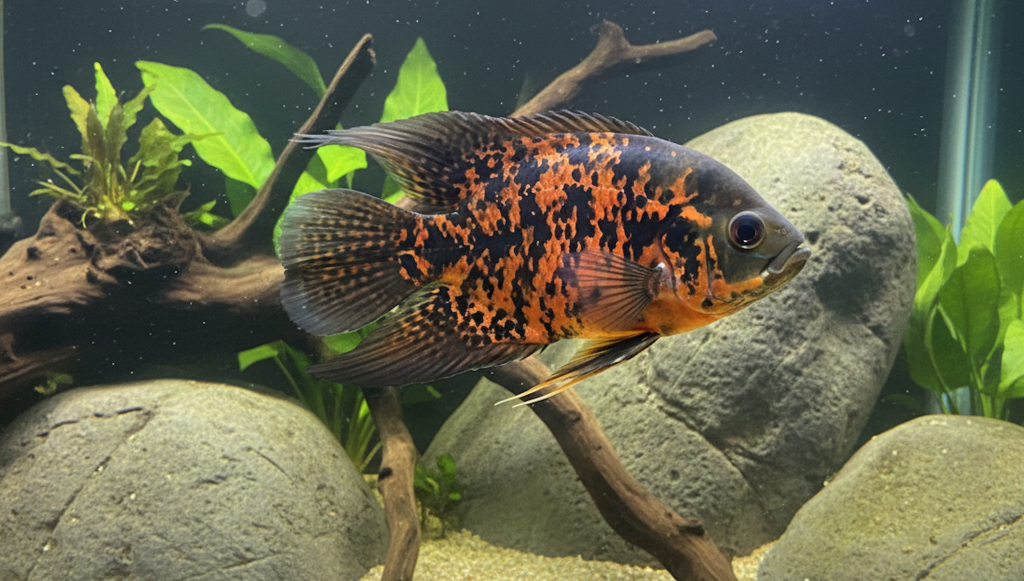
A long-finned variety. This trait can make them more susceptible to fin-nipping from tank mates.
What should I feed my Oscar?
The foundation of Oscars diet must be a high-quality, large sized cichlid pellet. Specifically, this provides the balanced nutrition required for their rapid growth. Furthermore, you must avoid feeding live “feeder fish” as they are primary vectors for parasites. In fact, feeder goldfish offer very poor nutritional value and contain high levels of thiaminase. Consequently, you can satisfy their predatory instincts with earthworms and dubia roaches. Therefore, I prioritize gut-loaded insects and frozen krill for their health.
What are the signs of health and illness?
A healthy specimen is active, possess vibrant colors, and maintains an aggressive appetite. Specifically, a sick fish may appear lethargic with clamped fins or faded coloration. Furthermore, the presence of small pits on the head indicates the onset of HITH. In fact, refusing food is the first analytical indicator of internal distress. Consequently, you must monitor their daily behavior for any deviation from the norm. Therefore, I prioritize immediate water testing when symptoms appear.
How do I treat Hole-in-the-Head disease?
Hole-in-the-Head is almost always linked to poor water quality and high nitrates. Specifically, the primary treatment involves a massive and consistent water change schedule. Furthermore, you must improve their nutrition by adding vitamin-enriched foods to their diet. In fact, chemical medications are rarely successful without fixing the underlying environment. Consequently, reducing nitrates below 20 ppm is the most effective cure. Therefore, I recommend a 75% water change as the first clinical step.
Can you tell the difference between a male and female?
Oscars are monomorphic, which means males and females look analytically identical. Specifically, there are no reliable color or fin differences between the sexes. Furthermore, the only definitive way to tell is during spawning behavior. In fact, the female’s breeding tube is wider and blunter than the male’s tube. Consequently, hobbyists often purchase groups to allow for natural pairing. Therefore, I recommend professional venting for those who need immediate sex identification.
Which tank mates are compatible with Oscars?
Housing Oscars with other fish is extremely challenging and requires a tank of 125 gallons or more. Specifically, if a fish can fit inside an Oscar’s mouth, it will eventually be consumed. Furthermore, you need tank mates that are large, robust, and capable of defending territory. In fact, Silver Dollars and large Common Plecos are among the best choices. Consequently, success is never guaranteed due to individual fish personalities. Therefore, I recommend a solitary setup for the safest outcome.
Oscar Fish FAQ
Oscars (Astronotus ocellatus) reach 12–14 inches in length and live for 10–15 years in a stable environment. That two-inch juvenile from the pet store will become a foot-long fish within the first year. Stunting their growth in a small tank causes permanent internal organ damage — plan for their adult size before making a purchase.
75 gallons is the absolute minimum for a single adult, but a 125-gallon system is far more appropriate for managing their enormous bioload. A pair or community setup requires 180 gallons or larger. Prioritise horizontal footprint over height — a six-foot-long tank is the standard recommendation for adult specimens.
Yes — bonding with their keeper is the primary appeal of this species. They quickly learn to recognise individual human faces, follow movement around the room, and perform theatrical displays at feeding time. They require consistent social interaction to prevent behavioural lethargy, which is why they are nicknamed “water dogs” in the hobby.
Hole-in-the-Head (HITH) is a chronic condition caused by high nitrate levels and nutritional deficiencies, characterised by pitting and erosion around the head and lateral line. It is directly preventable through pristine water quality — 50% weekly water changes and a varied, high-quality diet are the most reliable prevention methods. There is no cure once advanced; prevention is everything.
They will consume any fish small enough to fit in their mouth. Compatible tank mates must be similarly sized and robust — large Plecos, Severums, and Jack Dempseys have the best survival rates. Most adult specimens are best kept in solitary setups or in very large systems of 180 gallons or more with carefully chosen companions of equal size.
Sources
- University of Florida – IFAS
https://edis.ifas.ufl.edu/publication/FA158 - FishBase
https://www.fishbase.se/summary/Astronotus-ocellatus.html - Veterinary Partner
https://veterinarypartner.vin.com/default.aspx?pid=19239&id=4952044


Leave a Reply