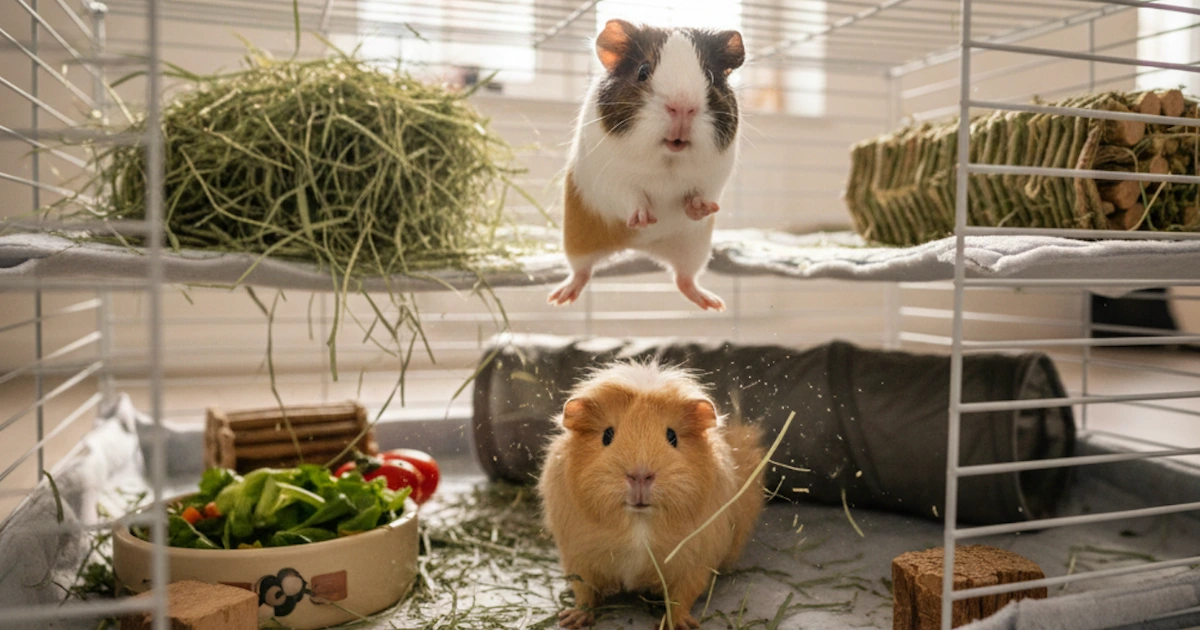
The guinea pig is one of the world’s most popular small pets. Specifically, they have adorable wheeks and bodies shaped like furry potatoes. They also have a charmingly anxious disposition. They are not as independent as a hamster. Furthermore, they are not as hyperactive as a gerbil. They are unique and social companions. Behind their simple appearance lies a set of specific needs. These dietary and social requirements are absolutely non-negotiable. Consequently, this guide serves as your complete handbook for these hay-munching herbivores.
My Experience: The High-Maintenance Drama
I am a zookeeper for a house full of strange creatures. I provide complex UVB gradients for my reptiles and I manage perfectly balanced water chemistry for my fish. Therefore, I am a master of the complex. However, nothing prepared me for the drama of a guinea pig.
I do not just see a cute rodent. Specifically, I see a tiny pirate on the verge of scurvy. I have a daily obsession with fresh bell peppers. This ensures they receive their necessary Vitamin C. It is a level of historical anxiety I never expected. It is a hilarious reminder of their weird requirements. Most “normal” looking pets have the most demanding needs. Therefore, you must be a dedicated researcher to keep them healthy.
Guinea Pig Social Needs and Life with Children
Are they good pets for children?
Yes. Specifically, they are excellent for older and responsible children. They are generally docile animals. Furthermore, they are not prone to biting. They are robust compared to smaller rodents. However, an adult must always be the primary caregiver.
Do they need to live with other guinea pigs?
Yes. Specifically, this is absolutely non-negotiable. Guinea pigs are intensely social herd animals. A single pig is lonely and deeply stressed. Therefore, you must keep them in same-sex pairs. Two females or two bonded males are great combinations. Consequently, your pets will lead a happy and social life.
Guinea Pig Enclosure and Habitat Standards
Floor space is everything for a guinea pig. Specifically, a pair needs at least 7.5 square feet of flat space. A 2×4 foot C&C cage is the absolute minimum. Bigger is always better for their health. Never use a cage with a wire-mesh bottom. Specifically, this is extremely dangerous for their feet. It causes painful sores known as bumblefoot. The cage must have a solid and flat bottom. Use safe bedding to keep the enclosure clean.
The Nutritional Pyramid
Their diet is a three-part pyramid. Specifically, all three parts are essential. Unlimited hay is the most important part. About 80 percent of their diet must be Timothy hay. This is crucial for their digestive health. Furthermore, it wears down their ever-growing teeth. Like humans, guinea pigs cannot produce Vitamin C. Specifically, they lack a specific enzyme for this process. Without daily Vitamin C, they develop scurvy.
The best source is fresh vegetables. Specifically, bell peppers are a fantastic high-C source. Provide a cup of fresh vegetables daily. Small amounts of plain Timothy-based pellets are also good. Avoid colorful fiesta mixes. Specifically, offer leafy greens like Romaine lettuce and cilantro. Carrots and fruits should be occasional treats. Consequently, your pig will receive balanced nutrition.
Decoding Guinea Pig Cavy Behavior and Health
Is it normal for them to eat their own poop?
Yes. Specifically, this is a healthy behavior called coprophagy. They produce a soft dropping called a cecotrope. They eat this directly from their bottom. This allows them to re-digest food. Furthermore, they absorb all essential nutrients this way.
Popcorning is a joyful sight. Specifically, it involves happy little jumps in place. It is a pure expression of excitement. “Wheeking” is a loud whistle. It means they hear a veggie bag. Furthermore, a deep vibrating purr is called rumbling. Teeth chattering is a sign of anger. Specifically, it is a warning to back off.
Common health problems include scurvy and dental issues. Specifically, lack of hay causes overgrown teeth. Bumblefoot comes from wire floors or dirty cages. Respiratory infections are often caused by toxic pine bedding.
Why is my guinea pig’s hair falling out?
This can be a sign of mites. Specifically, it might also be a fungal infection like ringworm. This requires a vet visit for diagnosis. Consequently, you must monitor their skin health.
Varieties and Lifespan
The American breed has a short and smooth coat. Specifically, it is the easiest to care for. The Abyssinian has rosettes or cowlicks. Furthermore, long-haired breeds like the Peruvian require daily grooming. They are like tiny and walking dust mops. The Teddy has a short and fuzzy coat. Specifically, Skinny Pigs are a mostly hairless breed. They require special care for their skin. Furthermore, they must maintain a warm body temperature. A well-cared-for guinea pig lives for 5 to 7 years.
Guinea Pig Care FAQ
Yes — for older, responsible children with adult supervision. They are docile, rarely bite, and are more robust than smaller rodents like gerbils. However, an adult must always be the primary caregiver and handler, especially for younger children.
No — this is non-negotiable. Guinea pigs are intensely social herd animals and a solitary pig suffers chronic psychological stress. Always keep them in same-sex pairs — two females or two bonded males are both excellent combinations.
This is completely normal and healthy — it is called coprophagy. They produce a special soft dropping called a cecotrope and eat it directly to re-digest food and absorb essential nutrients their bodies could not extract in the first pass. Never try to stop this behaviour.
Unlike most mammals, guinea pigs lack the enzyme to produce Vitamin C internally. Without a daily supply from fresh vegetables, they develop scurvy — a genuinely painful and fatal condition. Bell peppers are the most efficient source and should be part of their daily diet.
Hair loss is most commonly caused by mites or a fungal infection like ringworm — both require a vet diagnosis and treatment. It can also result from barbering by a cage mate. Do not ignore it — hair loss in guinea pigs rarely resolves on its own without intervention.
Sources
- The Spruce Pets
https://www.thesprucepets.com/guinea-pigs-social-animals-1238890 - MSD Veterinary Manual
https://www.msdvetmanual.com/exotic-and-laboratory-animals/guinea-pigs/disorders-and-diseases-of-guinea-pigs - VCA Animal Hospitals
https://vcahospitals.com/know-your-pet/guinea-pigs-feeding - Humane Society of the United States
https://www.humanesociety.org/resources/guinea-pig-housing

Leave a Reply
You must be logged in to post a comment.