
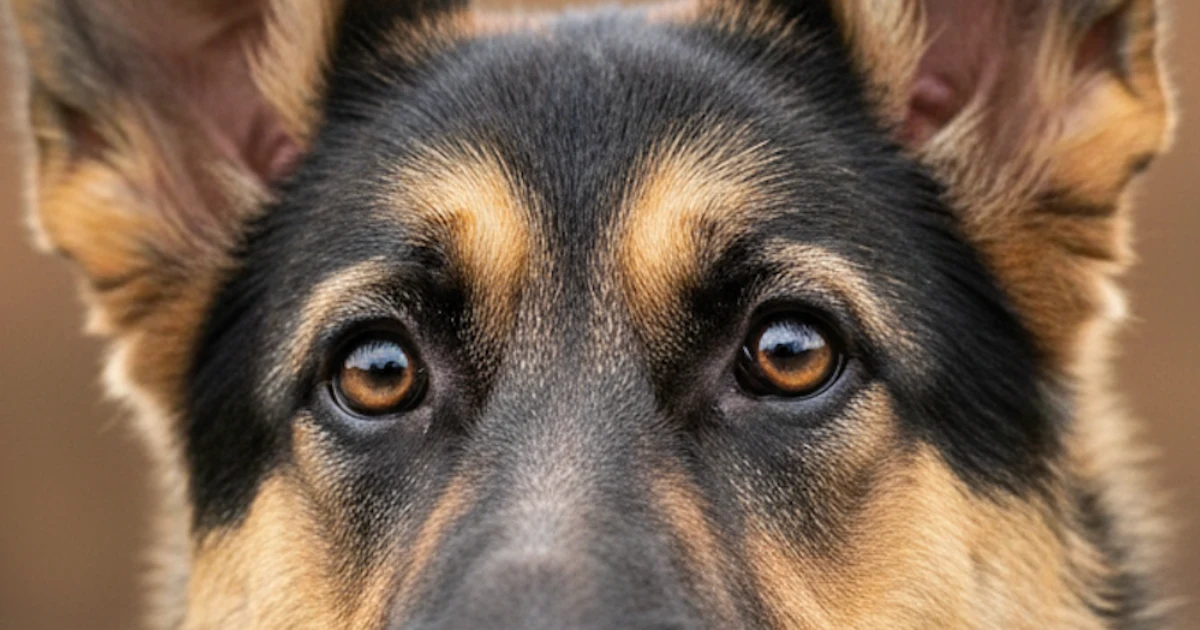
You’re sitting on the couch, minding your own business, when suddenly you feel it: a pair of intense, unblinking eyes into the side of your head. You look over, and there, you find your dog engaged in a staring contest you didn’t agree to enter. Indeed, this silent, focused gaze is one of the most common yet complex forms of canine communication. Hence, we must ask: Is it love? Is it a demand for snacks? Or furthermore, is it a sign of something more serious? This guide, therefore, will help you translate your dog’s intense stare.
Is My Dog Staring at Me to Show Affection?
Yes! This is one of the most common and heartwarming reasons. A long, soft, relaxed gaze is the dog equivalent of a hug.
The Science of the Gaze: When your dog stares at you with love, a hormone called oxytocin is released in both of your brains. This is the same “love hormone” that helps bond mothers and babies. Your dog is literally “hugging you with its eyes.”
What to Look For: This “loving Gaze” is accompanied by relaxed body language: a soft, slightly wagging tail, relaxed ears, and a calm, “soft” expression in their eyes. They are not tense; they are simply basking in your presence.
What Does My Dog Want When They are Staring?
This is the second most common reason: your dog is a furry little manipulator who has learned that staring gets results. They are trying to communicate a specific need or desire.
- “I Need to Go Potty”: This is often a more urgent, focused stare, sometimes accompanied by a whine or a trip to the door. They have learned that you are the keeper of the magic door to the outside world.
- “My Food/Water Bowl is Empty”: A stare directed at you, then at the bowl, then back at you. This is a clear and effective piece of communication.
- “You Are Eating Something, and I, Too, Enjoy Eating Things”: This is the classic “begging stare.” They have mastered the art of looking pathetic and deserving, hoping a piece of your snack will “accidentally” fall.
- “My Toy is Inconveniently Located”: If their favorite ball has rolled under the couch, they will often stare at you and then at the location of the toy, silently begging for your long, opposable-thumbed assistance.
Is My Dog Staring Because They’re Confused?
Yes, staring is a key part of how dogs process information.
Reading Your Cues: They are intensely focused on you, trying to understand what you’re about to do or what you just said. Have you ever said the word “walk” or “treat” and been met with a stare and an adorable head tilt? That is your dog hanging on your every word, trying to decipher if it’s “go time.”
Processing a Command: During a training session, a focused stare is a sign that your dog is concentrating and waiting for the next command. It’s a sign of a smart, engaged pup.
When is Staring a Sign of Aggression? (The Hard Stare)
This is the most critical distinction to make, as a hard stare is a warning sign that must be respected.
What it Looks Like: A hard stare is completely different from a loving gaze. The dog’s body will be stiff and tense. Their eyes will be wide and unblinking, their mouth will be closed, and you may see a low growl or a lip curl.
What it Means: This is a challenge or a threat. It’s most often associated with resource guarding. The dog is saying, “This is my bone/toy/food bowl, and you need to back off.” It can also be a sign of fear or territorial defensiveness.
What You Must Do:
- DO NOT STARE BACK. In the dog world, a direct, unbroken stare is a challenge. Staring back can escalate the situation.
- Look away casually and slowly back away.
- Give them space. Do not approach or try to take the object they are guarding.
- Consult a Professional: If your dog frequently displays this behavior, contact a professional dog trainer or behaviorist.
In almost all cases, your dog’s stare is a beautiful and complex form of communication, a silent language of love, needs, and curiosity that is a testament to the incredible bond we share with them.
Dogs Eye Language FAQ
Dogs stare for multiple distinct reasons, including affection, need communication, confusion, and aggression. Each type of dog staring carries different accompanying body language signals that distinguish one motivation from another. Reading the full context of the stare is essential for responding appropriately and safely.
A soft, relaxed, unblinking gaze is a strong indicator of canine affection. This loving dog stare triggers oxytocin release — the same bonding hormone involved in parent-infant attachment — in both the dog and the person receiving the gaze. Relaxed body posture, a soft tail wag, and calm facial muscles confirm this interpretation.
A prolonged dog stare with a relaxed body indicates engagement, need communication, or a desire for social connection. A prolonged stare paired with a rigid body, closed mouth, and wide unblinking eyes is a distinct aggression warning signal, not curiosity. Body language surrounding the stare determines which interpretation is correct.
A dog staring with a rigid body, closed mouth, wide unblinking eyes, and a possible low growl is a direct warning signal called a hard stare. This type of dog staring most commonly indicates resource guarding or territorial defensiveness. Never return the gaze directly, as sustained mutual eye contact functions as a challenge in canine communication.
A dog staring at you during feeding or while possessing a toy is a clear demonstration of resource guarding behavior. This type of dog staring signals that the animal perceives you as a potential threat to its possession. Approaching, reaching for the item, or returning the stare can escalate the behavior directly to a bite.
Yes, dogs learn quickly that staring generates a predictable human response, such as attention, food, or help retrieving an object. A dog staring repeatedly at the same location is deliberately directing your attention using a strategy that has worked before. This pattern is strong evidence of intentional, learned social communication in domestic dogs.
When a dog stares aggressively, avoid returning the gaze and calmly back away without sudden or fast movements. Returning eye contact during an aggressive dog staring episode functions as a direct challenge in canine social communication and escalates the situation. Persistent aggressive dog staring warrants professional evaluation from a qualified animal behaviorist.
Sources
- National Library of Medicine
https://www.ncbi.nlm.nih.gov/pmc/articles/PMC6115930/ - American Kennel Club
https://www.akc.org/expert-advice/advice/how-to-read-dog-body-language/ - Association of Professional Dog Trainers
https://apdt.com/resource-center/canine-body-language/ - Animal Cognition
https://link.springer.com/article/10.1007/s10071-021-01563-8


Leave a Reply