
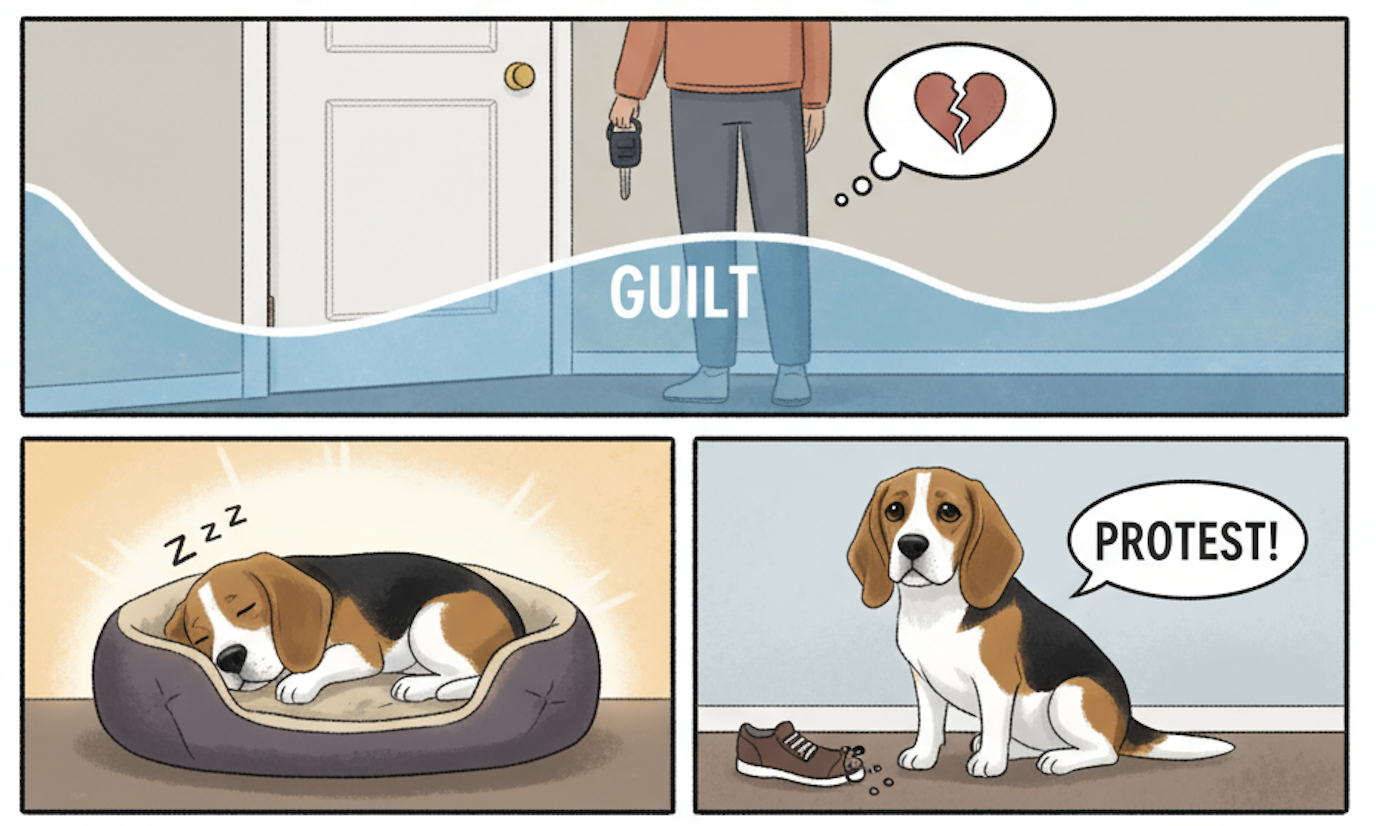
It is the silent, daily negotiation every dog owner has with their own conscience. As you grab your keys, a pair of sad, soulful eyes follow you to the door, and the guilt hits you like a tidal wave, how long is too long to leave your dog alone? Are they just bored, or are they truly lonely? Are they napping peacefully, or are they staging a protest by chewing on your new shoes? The question of how long you can leave your dog alone is not just about bladder control; it’s about their psychological well-being. This guide will provide a realistic, age-by-age breakdown and the tools you need to leave the house guilt-free.
Why is it Bad to Leave a Dog Alone for Too Long?
Dogs are highly social pack animals. They are not biologically or psychologically wired for long periods of solitude. Prolonged isolation can lead to:
Behavioral Issues: Boredom and pent-up energy are the primary drivers for destructive behaviors like chewing furniture, digging at carpets, and nuisance barking.
Psychological Distress: True loneliness can lead to depression and, in the worst cases, severe separation anxiety.
How Long Can a Puppy Be Left Alone?
This is the most critical stage. A young puppy is a baby and cannot be left alone for a full workday.
The Golden Rule (for Potty Breaks): A good rule of thumb is that a puppy can “hold it” for approximately one hour for every month of their age. So, a 3-month-old puppy can at mosthold it for 3 hours.
The Social Need: Beyond potty breaks, young puppies need socialization and interaction to develop into confident adults. Leaving them crated for 8 hours a day during this crucial period is detrimental.
The Bottom Line: If you have a puppy under 6 months old, you must have a plan for a midday break, whether it’s you coming home for lunch, a dog walker, or a doggy daycare.
How Long Can an Adult Dog Be Left Alone?
An adult, housetrained dog is more adaptable, but there are still limits.
The General Consensus: Most experts agree that an adult dog should not be left alone for more than 8 to 10 hours on a regular basis.
Factors to Consider: This is not a hard and fast rule. A low-energy Basset Hound will handle it much better than a high-strung Border Collie.
Do Senior Dogs Have Different Needs?
Yes. As dogs age, their bladder control often weakens, and they may not be able to hold it as long as they used to. They may also develop anxiety or Canine Cognitive Dysfunction (dementia), making them more stressed when left alone.
How Can I Prepare My Dog for Being Left Alone?
The goal is to teach your dog that being alone is safe, calm, and even a little bit rewarding.
What is the Most Important Thing I Can Do? (Exercise!)
A tired dog is a happy, sleepy dog. The single most effective way to ensure your dog is calm when you leave is to provide them with a significant amount of physical and mental exercise before you go. A brisk walk, a game of fetch, or a quick training session can make a world of difference.
How Can I Make My Departure a Positive Thing?
The “Magic Toy”: Designate a high-value, super-engaging puzzle toy that your dog only gets when you are gone. A classic example is a KONG toy stuffed with frozen treats. This creates a positive association with your departure.
The Art of the Boring Goodbye: Do not make a dramatic, emotional production out of leaving or coming home. This teaches your dog that your absence is a big, stressful deal. A calm, quiet exit and an equally calm greeting when you return is key.
What Are the Best Tools to Keep My Dog Happy While I’m Gone?
Puzzle Toys and Treat Dispensers: These give your dog a “job” to do, which combats boredom.
A “Nanny Cam”: An indoor security camera is a fantastic tool for giving you peace of mind and allowing you to see if your dog is sleeping peacefully or showing signs of stress.
Music or Television: Leaving a TV on or playing classical music can provide comforting background noise.
What’s the Difference Between Loneliness and True Separation Anxiety?
It’s crucial to know the difference. A lonely or bored dog might chew on a pillow. A dog with true separation anxiety is in a state of panic.
The Signs: The classic signs are destruction focused on escape points (doors, windows), house soiling (urination/defecation) only when alone, and excessive, non-stop vocalization.
What to Do: If you suspect true separation anxiety, you must consult with your veterinarian and a professional dog trainer or behaviorist. This is a serious condition that often requires a structured training plan and sometimes medication.
Sources
- American Kennel Club
https://www.akc.org/expert-advice/training/how-long-can-you-leave-a-puppy-alone/ - MSD Veterinary Manual
https://www.msdvetmanual.com/dog-owners/behavior-of-dogs/separation-anxiety-in-dogs - The Spruce Pets
https://www.thesprucepets.com/separation-anxiety-in-dogs-1117436 - VCA Animal Hospitals
https://vcahospitals.com/know-your-pet/behavior-counseling-senior-dog-cognitive-dysfunction - Association of Professional Dog Trainers
https://apdt.com/resource-center/leaving-your-dog-home-alone/


Leave a Reply