
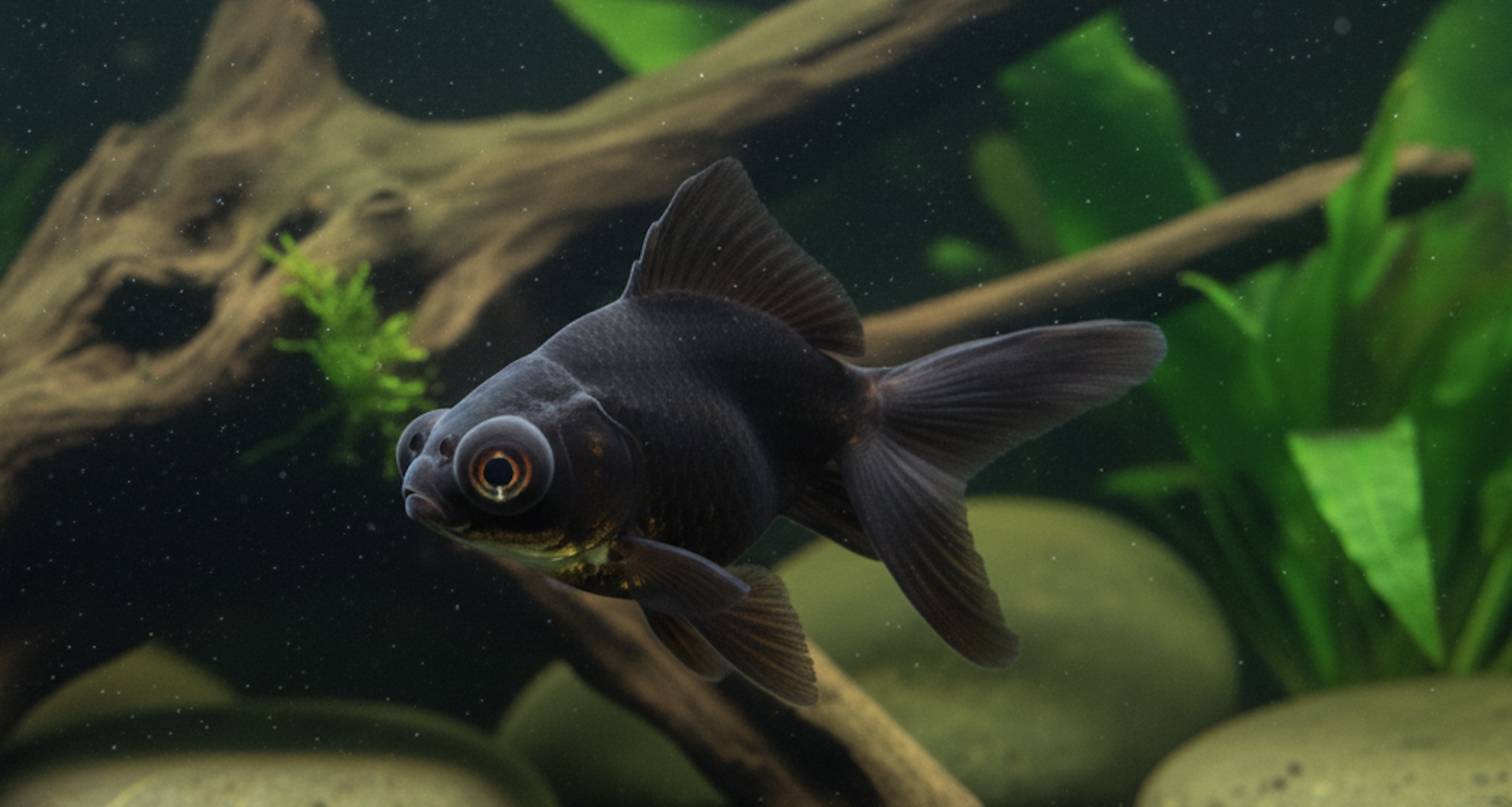
The Black Moor Goldfish (Carassius auratus) represents a pinnacle of selective breeding within the fancy goldfish hobby. Specifically, this variety is defined by its deep black pigmentation and protruding, telescopic eyes. Furthermore, they are often described as the “gentle giants” of small systems. In fact, their graceful movement and unique silhouette make them a centerpiece for specialized displays. Consequently, I reject the assumption that they are “disposable” pets for small bowls. Therefore, this guide provides the purely analytical evidence required for their stewardship.
Are Black Moor Goldfish good pets for beginners?
The Black Moor Goldfish can be an excellent pet for beginners who provide a properly “baby proofed” environment. Specifically, they are generally hardier than more extreme fancy varieties like the Bubble Eye or Celestial. Furthermore, their straightforward care requirements make them a rewarding introduction to fancy goldfish husbandry. In fact, their poor vision is the primary challenge for any novice keeper. Consequently, success depends entirely on removing sharp objects from the tank. Therefore, I prioritize specialized housing for their long-term health.
How long do Black Moor Goldfish live and how large do they get?
In a stable environment, Black Moor Goldfish typically live for ten to fifteen years as long term companions. Specifically, they reach a substantial adult body length of six to eight inches. Furthermore, you must provide a spacious environment to prevent stunted growth and skeletal deformities. In fact, providing clean water is the primary factor in reaching their maximum growth potential. Consequently, they outgrow small “starter” tanks within only a few years. Therefore, I recommend planning for an eight-inch fish immediately.
What are the key personality traits of a Black Moor Goldfish?
Black Moor Goldfish are known for being exceptionally peaceful, gentle, and docile inhabitants. Specifically, they are slow and clumsy swimmers due to their poor eyesight and heavy body shape. Furthermore, they exhibit a calm demeanor and are never aggressive toward tank mates. In fact, their interactive nature makes them one of the most personable fish in the hobby. Consequently, they are ideal for those seeking a “wet pet” that recognizes its owner. Therefore, I recommend consistent interaction to support their social nature.
Are Black Moor Goldfish social and do they need a friend?
Black Moor Goldfish are highly social animals that thrive when kept in pairs or larger groups. Specifically, a single goldfish can survive, but it will remain reclusive and chronically stressed. Furthermore, they feel significantly more secure when shoaling with other similarly-abled fancy varieties. In fact, you will observe much more active foraging and bold behavior in grouped fish. Consequently, isolation is a detriment to their psychological well-being. Therefore, I recommend keeping them with other slow-moving fancies.
Housing: Why is a bowl a cruel death sentence?
Keeping a fish with a high metabolic rate in an unfiltered bowl is an act of biological negligence. Specifically, a bowl lacks the surface area required for gas exchange and oxygenation. Furthermore, the absence of filtration leads to a toxic buildup of ammonia within only a few hours. In fact, the fish is essentially swimming in a “toxic soup” of its own waste. Consequently, this leads to a slow and suffocating respiratory failure. Therefore, I categorize bowls as unsuitable for any living creature.
What is the minimum tank size and proper filtration?
A 30-gallon aquarium is the absolute analytical minimum for a single adult Black Moor Goldfish to thrive. Specifically, you must utilize powerful filtration that maintains a gentle water flow to accommodate their swimming. Furthermore, a sponge filter or a baffled canister filter is a mandatory requirement. In fact, a strong current will toss these poor swimmers around, leading to chronic stress. Consequently, you must add ten additional gallons for each extra fish. Therefore, I prioritize horizontal swimming space and low-flow filtration.
How do you “baby-proof” the tank decorations?
This is the most critical aspect of Black Moor Goldfish care because their protruding eyes are extremely delicate. Specifically, the entire aquarium must be “baby-proofed” with smooth surfaces and soft sand. Furthermore, you must avoid any sharp or pointed objects that could tear the ocular tissue. In fact, silk plants are the safest alternative to live plants for this variety. Consequently, jagged rocks or pointy plastic items will lead to permanent eye injury. Therefore, I prioritize rounded river stones and smooth driftwood.
What are the ideal water parameters and diet?
Black Moor Goldfish thrive at room temperatures between 68°F and 74°F and do not require a heater. Specifically, the foundation of their diet must be a high quality sinking pellet or gel food. Furthermore, sinking foods prevent them from gulping air at the surface while they eat. In fact, ingested air is the primary cause of swim bladder disorder in round-bodied fancies. Consequently, sinking pellets ensure they can find their meal despite poor vision. Therefore, I recommend large, weekly water changes of 50%.
Why is my Black Moor Goldfish turning orange or bronze?
A shift from velvety black to bronze or orange red is usually a natural genetic process. Specifically, true black is an unstable color in goldfish genetics that often fades as the fish matures. Furthermore, this process can be accelerated by poor water quality or a lack of proper nutrition. In fact, some high-grade Moors maintain their black color for many years with optimal care. Consequently, color changes are rarely a sign of illness in an otherwise active fish. Therefore, I categorize this as a cosmetic trait.
What is swim bladder disorder and how is it treated?
A Black Moor Goldfish with swim bladder issues will either float uncontrollably or struggle to leave the bottom. Specifically, this is often caused by constipation or the ingestion of surface air during feeding. Furthermore, the first line of treatment is to fast the fish for two to three days. In fact, feeding a blanched, deshelled pea acts as a natural laxative to clear the blockage. Consequently, maintaining a strict diet of sinking pellets is the best long-term prevention. Therefore, I recommend monitoring their posture daily.
Which tank mates are compatible with Black Moor Goldfish?
The best tank mates are other slow moving, visually impaired fancy goldfish like Bubble Eyes or Celestial Eyes. Specifically, you must never house them with athletic single-tailed goldfish like Comets or Shubunkins. Furthermore, the fast-moving fish will out-compete the clumsy Moor for all available food. In fact, even “standard” fancies like Fantails are often too boisterous for these delicate swimmers. Consequently, keeping them in a “support needs” community is the most stable strategy. Therefore, I recommend avoiding any aggressive competitors.
Essential Equipment for Your Black Moor Goldfish
To provide the proper environment and protect the delicate eyes of your Black Moor Goldfish, I recommend these professional-grade items. Specifically, NorthFin Goldfish Sinking Pellets provide essential nutrition without air ingestion risks. Furthermore, the Fluval 307 Canister Filter with a baffled output ensures pristine water without a heavy current. In fact, utilizing Silk Aquarium Plants will provide a safe, soft hiding space that cannot injure their telescopic eyes.
Black Moor Goldfish FAQ
Yes — with the right setup. They are hardier than extreme fancy varieties like the Bubble Eye, but their poor telescopic eyesight requires a fully “baby-proofed” tank with no sharp decorations. Remove all pointed objects, use silk plants, and smooth substrate only.
This is a natural genetic process — true black is an unstable colour in goldfish that often fades to bronze or orange as the fish matures. Poor water quality and inadequate nutrition can accelerate the change. An otherwise active fish changing colour is not a health emergency.
30 gallons is the minimum for a single adult. Critically, filtration must produce gentle flow — strong currents toss these poor swimmers around and cause chronic stress. A baffled canister filter or sponge filter is the correct choice. Add 10 gallons for every additional fish.
They are social and thrive with companions, but tank mate selection is critical. Only house them with other visually impaired slow-moving fancies like Bubble Eyes. Never pair them with athletic single-tailed varieties — the speed difference means the Moor will consistently lose every meal.
Fast the fish for 2–3 days, then offer a single blanched deshelled pea as a natural laxative. Long-term prevention requires feeding only sinking pellets or gel food — never floating flakes, which cause surface air ingestion. Monitor swimming posture daily as an early warning habit.
Sources
- Seriously Fish
https://www.seriouslyfish.com/species/carassius-auratus/ - Wikipedia
https://en.wikipedia.org/wiki/Black_Moor - FishBase
https://www.fishbase.se/summary/Carassius-auratus.html - Veterinary Partner
https://veterinarypartner.vin.com/default.aspx?pid=19239&id=4952044 - Bristol Aquarists’ Society
https://www.bristol-aquarists.org.uk/goldfish/moor/moor.htm - Aquarium Source
https://www.aquariumsource.com/black-moor-goldfish/


Leave a Reply
You must be logged in to post a comment.