
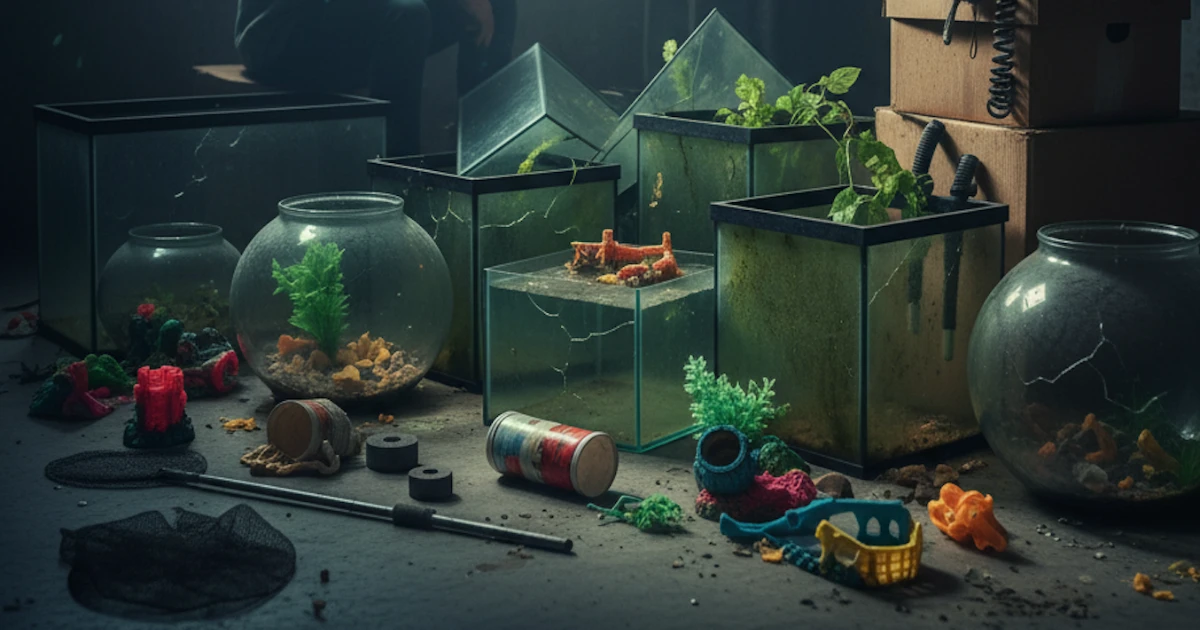
There is a secret initiation into the world of aquarium keeping, and it isn’t a handshake. It’s the moment of gut-wrenching panic when you realize you’ve made a terrible, irreversible mistake. Every seasoned aquarist with a basement full of beautiful tanks has a graveyard of past failures, a collection of “if only I had known” moments that haunt them to this day. This is the hard-won wisdom that isn’t always in the instruction manual. This guide is that wisdom, a confession of the most common and heartbreaking mistakes we’ve all made, so that hopefully, you don’t have to.
A Fishkeeping Criminal Record
If there were an Aquatic Court of Law, my past self would be serving a life sentence with no chance of parole. Indeed,my list of fishkeeping felonies is long and distinguished. Specifically, I am guilty of the heinous crime of adding fish to an uncycled tank. Furthermore, I am a repeat offender of the “just one more fish” rule. And yes, I once skipped quarantine and subsequently unleashed the glittery plague of Ich upon my favorite tank.
For these transgressions, I have paid for my sins with buckets of water, gallons of medication that stained my silicone blue, and a mountain of regret. Consequently, this guide is my confession, my pen-ance, and my attempt to help you avoid a similar criminal record.
Why Can’t I Add Fish the Same Day?
(The Nitrogen Cycle Mistake)
This is the original sin of fishkeeping.
The Mistake: It starts with ignoring the nitrogen cycle. You buy a beautiful new tank, a cool decoration, and a bunch of excited fish all on the same day. You get home, set it all up, and immediately add your new friends.
The Heartbreak: For a few days, things seem fine. Then, one by one, your fish become lethargic, gasp at the surface, and eventually die. You are left with a tank of heartbreak and a feeling that you are a failure.
The Hard Truth: The reality is that you have placed your fish in a toxic, unlivable environment. This is because a new tank has no beneficial bacteria to process the toxic ammonia from their waste. Therefore, you must perform a “fishless cycle” for 4-8 weeks before any fish enter the tank. There is no shortcut around this.
Isn’t a Smaller Tank Easier to Start With?
(The Nano Tank Mistake)
It’s the most counter-intuitive rule in the hobby, but it’s an absolute truth.
The Mistake: You choose a 5 or 10-gallon tank simply because it seems less intimidating and cheaper to start.
The Hard Truth: However, a small tank is a chemical tightrope walk. The tiny volume of water means that any small mistake, a single pinch of too much food, a single fish death will cause the ammonia and nitrite levels to spike to toxic levels almost instantly. Conversely, a large tank (20 gallons or more) is far more forgiving and stable, consequentlymaking it paradoxically easier for a beginner.
Do I Really Need a Quarantine Tank?
(Playing Aquatic Roulette)
This is the mistake that separates the novices from the veterans.
The Mistake: You buy a beautiful, healthy looking fish from a clean-looking tank at the store, and you add it directly to your established, thriving community tank.
The Hard Truth: You have just played Russian Roulette with your entire aquatic world. That new fish could be a ticking time bomb, carrying parasites like Ich or a bacterial infection that it is currently immune to, but which will decimate your established, stress-free fish. A separate 10-gallon (40 liters) quarantine tank where all new arrivals live for 4-6 weeks is not an optional extra; it is the single most important piece of aquarium insurance you will ever own.
That Tiny Pleco is So Cute! Should I Get It?
(Adult Size Mistake)
The Mistake: You buy a “Common” Pleco, an iridescent “shark,” or a Pacu when it is a cute, 2-inch baby, thinking it will stay that way.
The Hard Truth: You have just purchased a monster. That Pleco will grow to be two feet long. That “shark” will become an aggressive, 1-foot-long predator. That Pacu will become a 3-foot, 50-pound vegetarian behemoth that belongs in a public aquarium. Always research the full adult size of any fish before you buy it.
Should I Scrub My Filter Squeaky Clean?
(Killing Your Invisible Pets)
The Mistake: During maintenance, you do what seems logical: you take out your filter sponge or cartridge and wash it under the tap until it’s sparkling clean.
The Hard Truth: You have just committed mass murder. The heart of your aquarium, the entire colony of beneficial bacteria that keeps your fish alive, lives in that “dirty” filter media. The chlorine in your tap water instantly kills them. You have effectively “un-cycled” your tank. Never clean your filter media in tap water. Gently swish and squeeze it in the old tank water you’ve removed during a water change.
Why Are My Fish Still Fighting?
(Incompatible Fish Mistake)
The Mistake: You stock your tank based on looks alone, creating a beautiful but doomed cocktail of personalities.
The Hard Truth: You have created a tiny aquatic warzone. A peaceful Guppy cannot live with a fin-nipping Tiger Barb. A territorial Angelfish will eventually see a slender Neon Tetra as a snack. You must research the temperament and size compatibility of every fish to create a peaceful community, not a constant battle.
But They Look So Hungry!
(The Overfeeding Mistake)
The Mistake: Your fish rush to the surface and act like they are starving every time you walk by, so you give them another pinch of food.
The Hard Truth: You are killing them with kindness. Overfeeding is the #1 cause of poor water quality. The uneaten food rots, creating a massive ammonia spike. A fish’s stomach is only the size of its eyeball. Feed them a small amount, once per day, that they can finish in one minute.
Beginner Aquarium Mistakes FAQ
The most dangerous aquarium mistakes are adding fish to an uncycled tank and cleaning filter media under tap water. Both destroy the beneficial bacteria that convert lethal ammonia into less toxic compounds, with lethal consequences. Each can kill an entire tank of fish within days and is completely preventable with basic research before buying livestock.
Fish die in new aquariums because no beneficial bacteria exist to convert toxic ammonia from fish waste into safer compounds. A visually clean tank is chemically lethal during the first four to eight weeks until the nitrogen cycle completes. Running a fishless cycle before adding livestock is the only way to prevent this outcome entirely.
Small aquariums are harder to manage because their limited water volume amplifies every chemical mistake instantly. One dead fish or a minor overfeeding event spikes ammonia to lethal levels before the keeper can respond. A 20-gallon tank provides the water volume needed to buffer these errors and give the nitrogen cycle time to respond.
Cleaning aquarium filter media under tap water instantly kills the beneficial bacteria colony inside, destroying the tank’s nitrogen cycle. The chlorine in tap water eliminates the bacteria that took weeks to grow and that process toxic ammonia daily. Filter media must be rinsed only in old tank water during water changes — never under a tap.
The most costly aquarium mistake when buying fish is failing to research adult size before purchase. Common plecos, iridescent sharks, and pacus are sold as small juveniles but grow to sizes no home aquarium can accommodate. A 2-inch juvenile in the store is not a preview of the 60-centimeter adult it becomes within two years.
Overfeeding causes poor water quality because uneaten food decays into ammonia, poisoning fish from the substrate upward. A fish’s stomach is approximately the size of its own eye, making even small portions exceed what most fish can process. Feeding only what fish consume in one minute per day eliminates this chain of problems entirely.
The most common aquarium mistake causing aggression is choosing fish for appearance without researching temperament and size compatibility. Fin-nipping barbs housed with bettas, or territorial angelfish sharing a tank with neon tetras, create inevitable conflict. Researching every species’ adult temperament before buying is the only reliable way to build a genuinely peaceful community tank.
Sources
- Aquarium Co-Op (The Nitrogen Cycle)
https://www.aquariumcoop.com/blogs/aquarium/the-nitrogen-cycle - The Spruce Pets (Large vs. Small Aquariums)
https://www.thesprucepets.com/is-a-larger-aquarium-easier-1381250 - Practical Fishkeeping (Filter Maintenance)
https://www.practicalfishkeeping.co.uk/features/how-to-clean-your-filter/ - Seriously Fish (Common Pleco Profile)
https://www.seriouslyfish.com/species/pterygoplichthys-pardalis/ - FishLab (How Much to Feed Fish)
https://fishlab.com/how-much-to-feed-fish/


Leave a Reply