
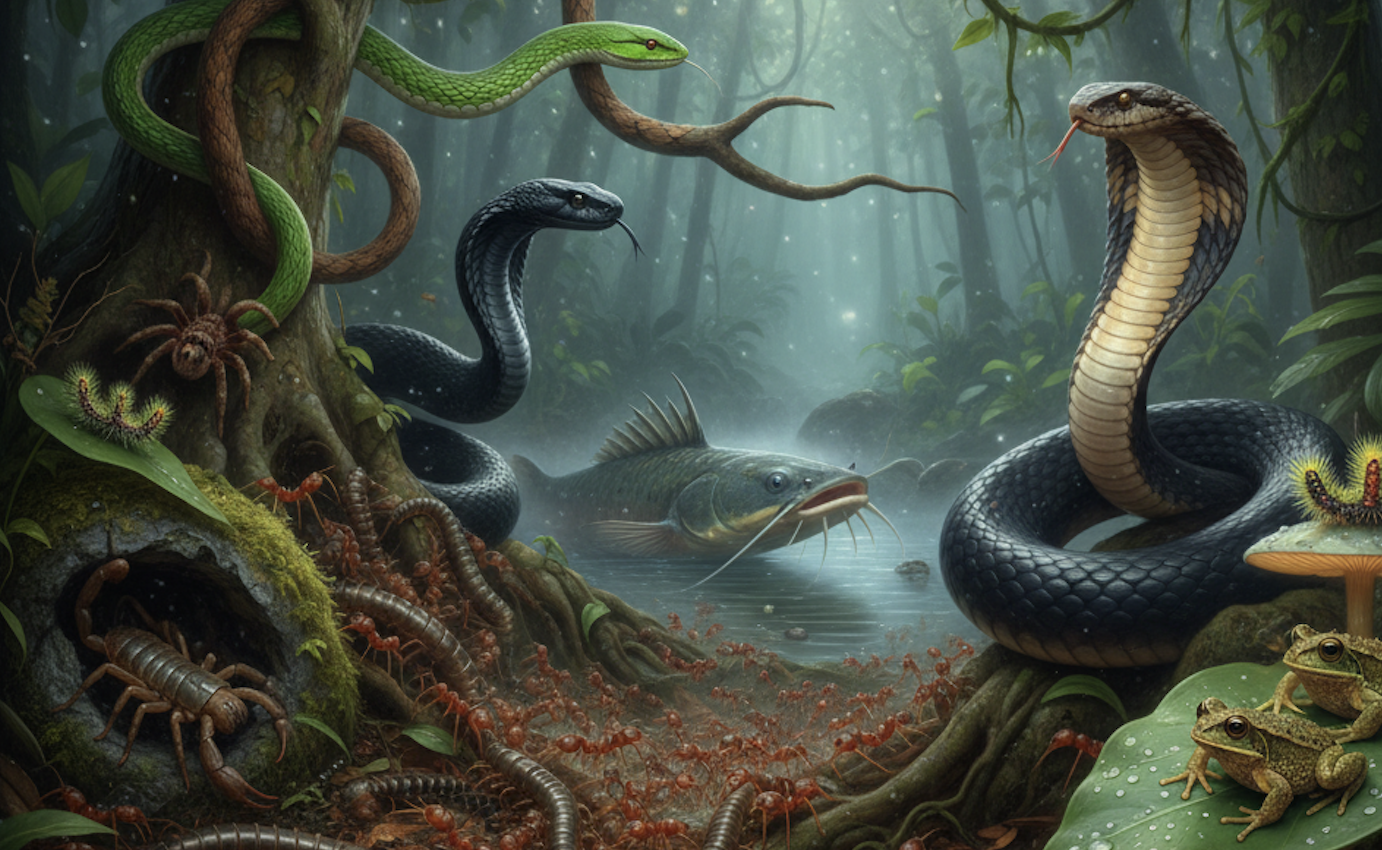
Uganda and Rwanda are the emerald heart of Africa. Specifically, they are lands of misty volcanoes and dense rainforests. Shimmering Great Lakes define this beautiful region. You might come face-to-face with a family of Mountain Gorillas. This is one of the most powerful wildlife encounters imaginable. However, you must not forget the jungle undergrowth. It is a world teeming with smaller creatures. Specifically, these animals have mastered the art of venom. This guide is your essential field manual. It fosters respect for the incredible biodiversity of this primate paradise.
Which Dangerous Snakes Inhabit the Rainforests of Uganda and Rwanda?

The lush forests of Uganda and Rwanda host famous snakes. The Black Mamba (Dendroaspis polylepis) is Africa’s most feared snake. Specifically, it has extremely potent neurotoxic venom. You can find them in savanna areas and forest edges.

The Forest Cobra (Naja subfulva) is also a major resident. It is a large and intelligent predator. Specifically, it is perfectly adapted to the forest floor.

The Black-necked Spitting Cobra can accurately spit venom. Specifically, it aims for the eyes of a threat from a distance.

The Gaboon Viper is the master of rainforest camouflage. This thick-bodied viper has the longest fangs of any snake. Furthermore, its geometric pattern makes it nearly invisible in the leaf litter.

The Rhinoceros Viper is a close relative. It has prominent horns on its snout. Therefore, both are masters of hiding in plain sight.

Slender tree-dwelling snakes also live in Uganda and Rwanda. These include the Boomslang and the Twig Snake. Specifically, they are shy rear-fanged snakes. Bites are extremely rare. However, they are a medical emergency. Their hemotoxic venom is very potent. Consequently, you must treat them with extreme caution.
Venomous Spiders and Scorpions to Watch For

Button Spiders are the African cousins of the Black Widow. Specifically, they belong to the Latrodectus species. Their neurotoxic venom is medically significant. They build messy webs in dark places. Look for them under logs or in outhouses.

Baboon Spiders are large tarantulas. Specifically, their size is intimidating. Their bite is painful but not life-threatening to humans.

Furthermore, you might find Rock Scorpions in Uganda and Rwanda. These flat scorpions live in tight rock crevices. Specifically, their sting is painful but typically not dangerous.
Are There Poisonous Frogs in Uganda and Rwanda?

Glandular Reed Frogs live in these lush environments. Specifically, they are not truly venomous. They do not inject venom. However, they secrete toxic compounds from their skin. This is a defense mechanism. Therefore, never handle any wild amphibian with bare hands. Consequently, you will avoid skin irritation.
Dangers in the Lakes and Rivers of Uganda and Rwanda

The African Sharptooth Catfish lives in Uganda and Rwanda lakes. Specifically, it has sharp spines on its fins. These spines are coated in a mild venom. This causes a very painful wound. Furthermore, these wounds are prone to infection. Consequently, fishermen must handle them carefully.
Other Venomous Insects and Bugs

The Giant African Centipede is a formidable predator. Specifically, it has a very painful venomous bite.

Blister Beetles are also common. Do not crush these beetles against your skin. They release a chemical called cantharidin. Specifically, this causes painful chemical burns.

Stinging Caterpillars are the larvae of several moth species. Specifically, they have fine venomous hairs. These cause an intensely painful and itchy rash.

Watch for Velvet Ants. They are actually flightless female wasps. They are known for an incredibly painful sting.

Safari Ants, or Siafu, attack in massive swarms. Specifically, they are not traditionally venomous. However, their coordinated bites are powerful. They can be dangerous if you cannot move away.

Paper Wasps and Hornets also deliver painful stings. Specifically, they attack if you disturb their nests.

Assassin Bugs can deliver a bite like a bee sting.

The Tsetse Fly is a major pest in Uganda and Rwanda. It has a painful bite. Specifically, it transmits sleeping sickness in many national parks. Pompilid Wasps hunt large spiders. Their sting is excruciatingly painful. However, they are not aggressive toward humans.
What Should I Do If I Am Bitten or Stung?
Tell your professional guide immediately. Specifically, your guide is your most important asset. They are trained in local wildlife first aid. Furthermore, stay calm and listen. Do not panic during the encounter. Specifically, follow your guide’s instructions precisely. They know the correct protocol for evacuation. Therefore, do not attempt any folk remedies. Do not cut or suck a snakebite. Furthermore, do not apply a tourniquet. Consequently, you will give the medical professionals the best chance to help you.
Sources
- African Snakebite Institute
https://www.africansnakebiteinstitute.com/snake/forest-cobra/ - National Geographic
https://www.nationalgeographic.com/animals/reptiles/facts/gaboon-viper - World Health Organization
https://www.who.int/news-room/fact-sheets/detail/trypanosomiasis-human-african-(sleeping-sickness) - BIAZA
https://biaza.org.uk/news/detail/venomous-fish-handling-guidelines
Leave a Reply
You must be logged in to post a comment.