
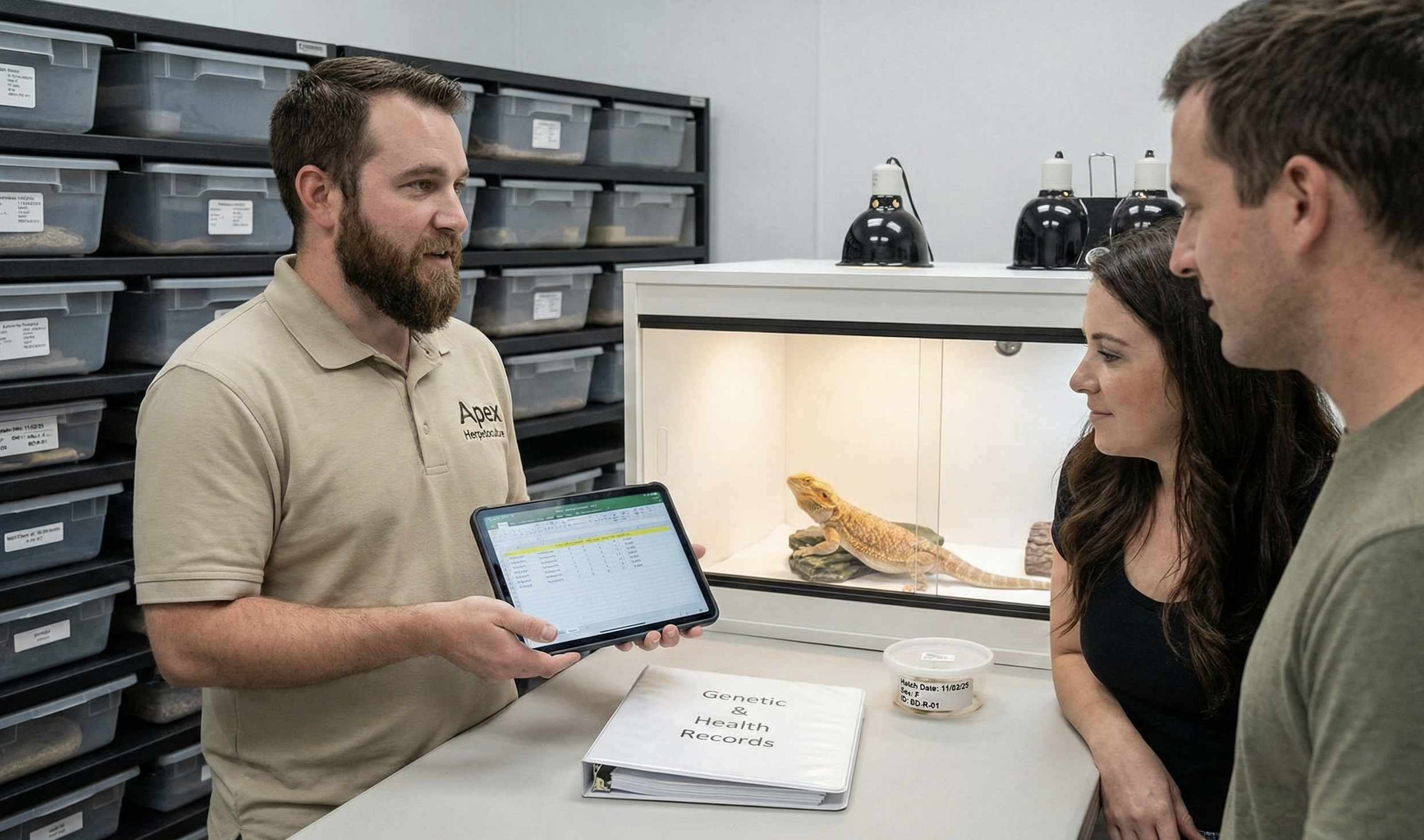
Identifying a Reputable Reptile Breeder
You have finished your research and chosen your species. Now, you are ready to buy your new reptile. However, distinguishing an ethical breeder from a simple “seller” is a vital skill. Specifically, the difference lies in the abundance of information a professional provides. A great breeder offers a piece of their passion project rather than just a product. Furthermore, they want to see every animal thrive in its new home. Therefore, this guide provides an essential checklist for identifying a reputable reptile breeder.
What Basic Information Should Every Breeder Provide?
Every breeder must provide baseline data as a non-negotiable requirement for a sale. If a seller cannot provide these facts, you must consider it a major red flag. Specifically, you need the hatch date or date of birth to determine the exact age. Furthermore, this data informs the feeding schedule and the timeline for sexual maturity. You must also confirm the sex of the animal and the specific techniques used for determination. Consequently, knowing the exact species and subspecies allows you to conduct precise husbandry research.
Why is Genetic and Lineage Information So Important?
In the modern reptile hobby, genetics represent a massive component of animal value and health. Specifically, breeders of “morph-heavy” species like Ball Pythons must disclose the exact pairing of the parents. Furthermore, they should identify any recessive genes the animal carries, commonly known as “Hets.” Knowing the genetic makeup prevents the accidental breeding of lethal traits in future generations. Therefore, a transparent breeder will proudly share photos of the parents to demonstrate quality and lineage.
How Can I Be Sure the Reptile is Healthy and Well-Established?
Detailed record-keeping separates professional breeders from amateur sellers who prioritize quick profits. Specifically, you must request a comprehensive feeding history that includes prey type, size, and frequency. Furthermore, a log of shed cycles serves as a primary indicator of proper hydration and skin health. Weight records also demonstrate that the animal is growing steadily rather than just surviving. Consequently, these records prove the animal is well-established and ready for the stress of a new environment.
What Kind of After-Sale Support Does a Good Breeder Offer?
The relationship between a buyer and an ethical breeder does not end when money changes hands. Specifically, a passionate breeder acts as a lifetime resource for their animals. They should answer your questions about behavior or care months after the transaction is complete. Furthermore, many professionals provide species-specific care sheets to guide you through the initial acclimation period. Most reputable breeders also offer a health guarantee to ensure the animal arrives in peak condition.
Why is a Good Breeder Interviewing Me?
The most significant sign of an ethical breeder is their willingness to interview potential buyers. Specifically, they care more about the animal’s future welfare than making a fast sale. They will ask for detailed information regarding your enclosure size, heating methods, and humidity levels. Furthermore, they may request photographs of your setup to verify your preparation. A great breeder will refuse a sale if they believe you are unprepared for the responsibility. Therefore, their integrity ensures the animal’s protection.
My Experience
During my work at Exotastic Earth, I once encountered a “breeder” who could not tell me the hatch date of a hatchling monitor. Specifically, the seller lacked any recorded feeding history and seemed rushed to complete the transaction. Consequently, I refused the purchase because the lack of data suggested poor husbandry. In fact, a seller who hides information is usually hiding a health problem. Therefore, I only support breeders who prioritize data transparency over marketing. Identifying a reputable reptile breeder requires you to be as analytical as the person selling the animal.
Reptile Breeder FAQ
Check for transparency regarding the animal’s lineage and hatch date. Ask for specific photos of the actual animal for sale rather than stock images. A reputable breeder will provide detailed records of feeding habits and recent sheds.
Avoid sellers who cannot answer basic questions about the species’ specific care requirements. Be wary of “flippers” who buy cheap animals to resell them quickly without proper quarantine. If the seller refuses to provide photos of the breeding facility or parents, walk away.
Captive-bred reptiles are generally hardier and more accustomed to human interaction. Wild-caught specimens often carry heavy parasite loads and suffer from extreme stress during transport. Purchasing captive-bred animals also prevents the depletion of natural populations.
Inquire about the animal’s current diet and if it is eating consistently. Ask about the specific lighting and temperature parameters used in its current enclosure. Request information on the breeder’s health guarantee and return policy in case of underlying issues.
Large retail chains often prioritize volume over individual animal health. Staff at these stores may lack specialized knowledge regarding exotic husbandry. Buying directly from a dedicated breeder ensures you receive an animal that has received focused, expert care.
Sources
- Association of Reptile and Amphibian Veterinarians
https://arav.org/ - USARK
https://usark.org/expanded-keepers-and-breeders-ethics-discussion/ - USARK
https://usark.org/keepers-code-of-ethics/ - The Vet Desk
https://thevetdesk.com/pet-lifestyle/reptiles/how-to-find-responsible-reptile-breeder/


Leave a Reply