
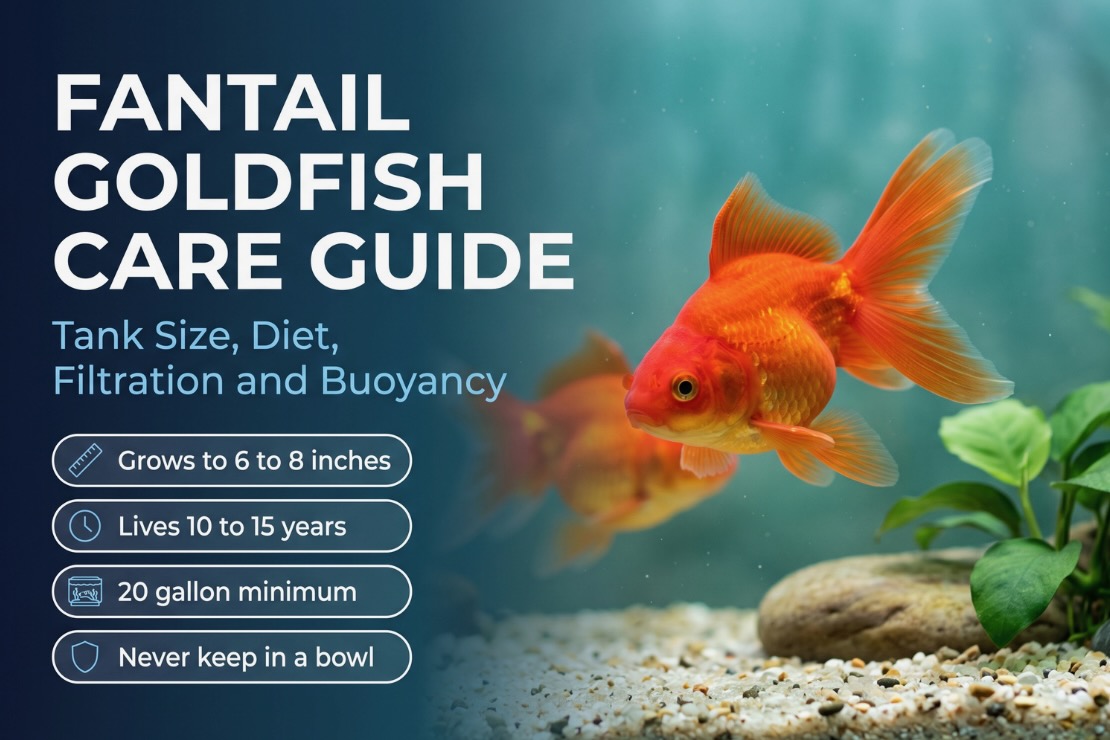
The Fantail Goldfish (Carassius auratus) is the archetype, the “base model” from which so many other elaborate fancy varieties have been developed. Their relative hardiness and timeless beauty make them the perfect first step into the wonderful world of fancy goldfish, provided you understand their specific needs.
The Fantail Goldfish represents the foundational variety of the fancy goldfish hobby. Specifically, this species is defined by its egg shaped body and spectacular double tail fin. Furthermore, they are the ideal choice for those transitioning from common goldfish to more specialized breeds. In fact, their hardiness makes them a resilient resident for well-maintained aquariums. Consequently, I reject the assumption that they are “disposable” pets for small bowls. Therefore, this guide provides a purely analytical look at their complex husbandry. As a result, you will foster a healthy and vibrant long-term companion.
Are Fantail Goldfish good pets for beginners?
The Fantail Goldfish is an excellent pet for beginners who can provide the correct environmental setup from day one. Specifically, they are one of the hardiest fancy varieties and are more forgiving of minor mistakes. Furthermore, their physical resilience makes them much easier to manage than more delicate breeds like the Bubble Eye. In fact, success depends entirely on providing a large enough tank to dilute their significant waste. Consequently, they are a high-value species for those committed to proper filtration. Therefore, I prioritize stable water chemistry for their success.
How long do Fantail Goldfish live and how large do they get?
In a stable aquarium environment, Fantail Goldfish typically live for ten to fifteen years. Specifically, they grow into substantial animals reaching a body length of six to eight inches. Furthermore, you must not include their impressive double tail when calculating their total physical dimensions. In fact, providing a proper aquarium instead of a bowl is the only way to reach these milestones. Consequently, they outgrow small “starter” systems within only a few years. Therefore, I recommend planning for an eight-inch fish immediately. As a result, you ensure their health.
Are Fantail Goldfish social and do they need companionship?
Fantail Goldfish are highly social animals that thrive when kept in pairs or larger groups. Specifically, a single goldfish can survive, but it will remain reclusive and chronically stressed. Furthermore, they feel significantly more secure when shoaling with other similarly abled fancy varieties. In fact, you will observe much more active foraging and bold behavior in grouped fish. Consequently, isolation is a detriment to their psychological well being. Therefore, I recommend keeping them with other slow moving fancies. As a result, the aquarium remains a harmonious environment.
Housing: Why is a bowl a cruel death sentence?
Keeping a fish with a high metabolism in an unfiltered bowl is an act of biological negligence. Specifically, a bowl lacks the surface area required for gas exchange and oxygenation. Furthermore, the absence of filtration leads to a toxic buildup of ammonia within only a few hours. In fact, the fish is essentially swimming in a “toxic soup” of its own waste. Consequently, this leads to a slow and suffocating respiratory failure. Therefore, I categorize bowls as unsuitable for any living creature. As a result, you must utilize an aquarium.
What is the minimum tank size and proper substrate?
The absolute analytical minimum tank size for a single Fantail Goldfish is a 20 gallon aquarium. Specifically, a 30 gallon tank is far superior for maintaining stable water chemistry as they mature. Furthermore, soft sand is the ideal substrate because they love to forage and sift through the bottom. In fact, sharp gravel can damage their delicate mouths and lead to secondary infections. Consequently, sand prevents debris from becoming trapped in the substrate layer. Therefore, I prioritize horizontal swimming space and fine sand for their health.
How do you manage the massive waste production of the Fantail Goldfish?
You must utilize an oversized filtration system to process the high volume of ammonia they produce. Specifically, all goldfish are messy eaters and create a significant bioload. Furthermore, a powerful canister filter rated for twice your tank size is a mandatory requirement. In fact, regular weekly water changes of at least 50% are necessary to keep nitrates low. Consequently, stagnant or poor water quality will quickly lead to systemic illness. Therefore, I prioritize high turnover filtration rates. As a result, your aquarium stays clean.
What are the ideal water parameters and diet?
They thrive at room temperatures between 68°F and 74°F and do not require a heater. Specifically, the foundation of their diet must be a high-quality sinking pellet or gel food. Furthermore, sinking foods prevent them from gulping air at the surface while they eat. In fact, ingested air is the primary cause of swim bladder disorder in round-bodied fish. Consequently, you should avoid floating flakes to protect their internal organs. Therefore, I recommend supplementing their meals with blanched peas. As a result, you support their digestion.
How do you identify and manage buoyancy issues in a Fantail Goldfish?
A Fantail Goldfish with swim bladder issues will either float uncontrollably or struggle to leave the bottom. Specifically, this is often caused by constipation or the ingestion of surface air during feeding. Furthermore, the first line of treatment is to fast the fish for two to three days. In fact, feeding a blanched, deshelled pea acts as a natural laxative to clear the blockage. Consequently, maintaining a strict diet of sinking pellets is the best long-term prevention. Therefore, I recommend monitoring their swimming posture daily.
How do you identify the defining features of a Fantail?
Two key features define this classic fish: a short, egg shaped body and a paired caudal fin. Specifically, the tail should be split and held high rather than drooping. Furthermore, when viewed from behind, the tail fin should resemble a perfect triangle. In fact, a Calico pattern is simply a beautiful color variation made of nacreous scales. Consequently, these scales create a mottled pattern of orange, blue, and black. Therefore, I categorize them by their distinctive fin shape and body bulk. As a result, you identify the breed accurately.
Which tank mates are compatible for a fancy community?
The best tank mates are other slow-moving, double-tailed fancy goldfish like Ryukins or Orandas. Specifically, you must never house them with fast, athletic single-tailed goldfish like Comets. Furthermore, the single-tails will outcompete the clumsy Fantail for all available food. In fact, this constant competition leads to the slower fish starving or becoming stressed. Consequently, keeping them in a “fancy only” system is the most stable strategy. Therefore, I recommend avoiding any fish that might nip at their flowing fins. As a result, the tank remains peaceful.
Essential Equipment for Your Fantail Goldfish
To provide the proper environment and prevent swim bladder issues, I recommend these professional-grade items. Specifically, NorthFin Goldfish Sinking Pellets are formulated to prevent air ingestion during feeding. Furthermore, the Fluval 307 Canister Filter offers the high turnover rate required to manage the heavy waste of fancy goldfish. In fact, using a Python Water Changer makes the mandatory weekly 50% water changes efficient and consistent.
Fantail Goldfish FAQ
Yes — with conditions. The Fantail is the hardiest of all fancy goldfish varieties and more forgiving of minor mistakes than delicate breeds like the Bubble Eye or Telescope. However, success depends entirely on providing a large enough tank with powerful filtration from day one. They are not a bowl fish under any circumstances.
Fantails grow to 6–8 inches in body length and live for 10–15 years in a stable aquarium. Their egg-shaped body is compact but their double tail is substantial — do not include the tail when calculating their physical dimensions. A proper aquarium is the only environment that allows them to reach these milestones.
20 gallons is the analytical minimum for a single adult, but a 30-gallon tank is far superior for long-term water stability. Horizontal swimming space matters more than height — Fantails are not strong swimmers and need unobstructed, gentle flow. Fine sand substrate is strongly preferred over gravel to protect their delicate foraging mouths.
The primary cause is surface air ingestion during feeding combined with their compressed egg-shaped body, which leaves little room for organ positioning. Prevention is straightforward — feed only sinking pellets or gel food and never floating flakes. A two to three day fast followed by a blanched, deshelled pea is the first treatment for an active buoyancy episode.
Other slow-moving double-tailed fancy goldfish — Ryukins and Orandas — are the only appropriate companions. Never house Fantails with fast single-tailed varieties like Comets or Shubunkins. The speed difference means the Fantail will be consistently outcompeted for food, leading to starvation and chronic stress despite appearing to share a peaceful tank.
Sources
- Seriously Fish
https://www.seriouslyfish.com/species/carassius-auratus/ - FishBase
https://www.fishbase.se/summary/Carassius-auratus.html - Veterinary Partner
https://veterinarypartner.vin.com/default.aspx?pid=19239&id=4952044 - Animal Diversity Web
https://animaldiversity.org/accounts/Carassius_auratus/ - Aquarium Co-Op
https://www.aquariumcoop.com/blogs/aquarium/goldfish-care-guide
Leave a Reply
You must be logged in to post a comment.