
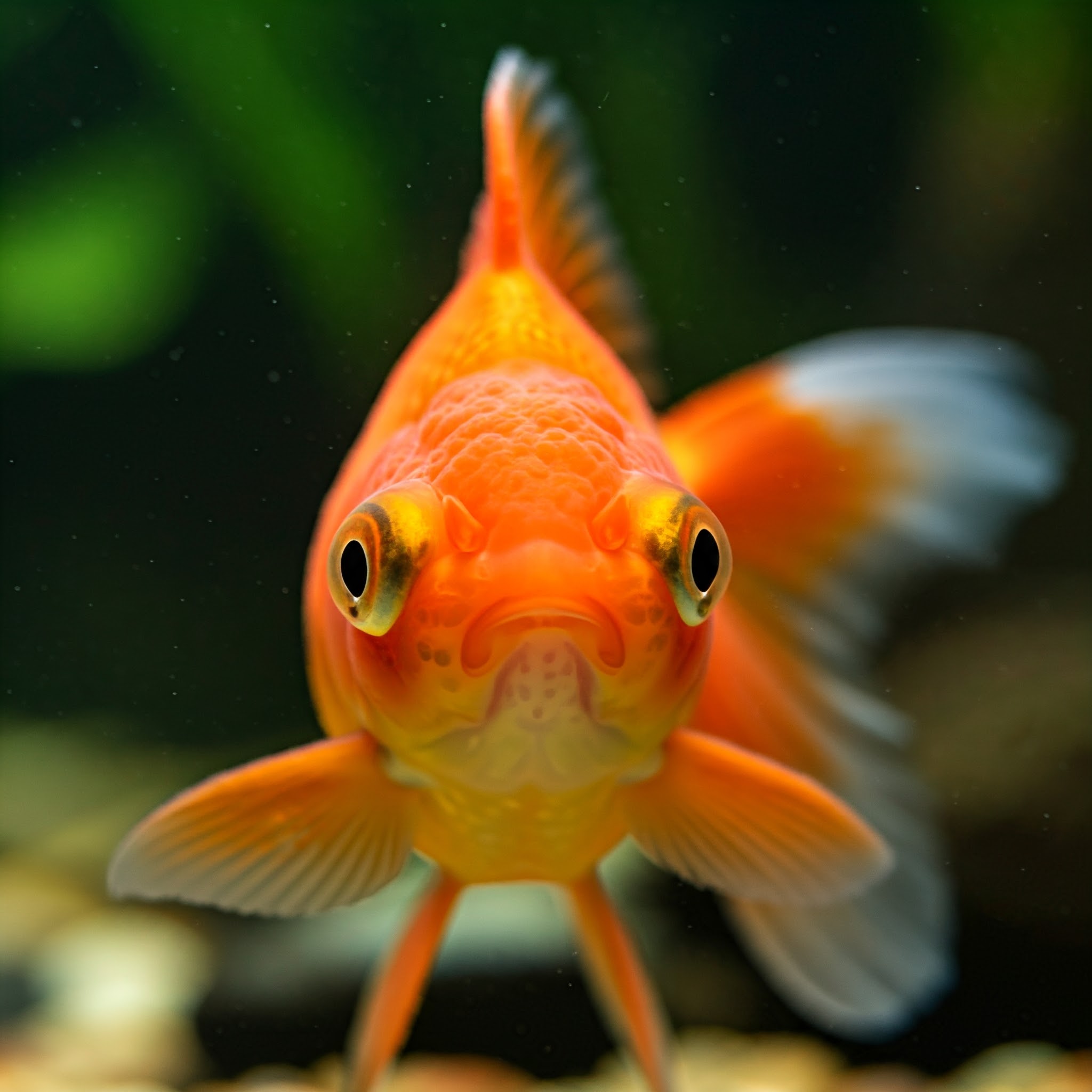
For so many of us, our first pet was a bright orange flash of fins in a tiny glass bowl, a prize won at a local fair. We gave it a name, sprinkled in a flurry of flakes each day, and were heartbroken when, inevitably, it didn’t last more than a few months. We were told this was normal, that goldfish just don’t live very long.
This is the great tragedy of the goldfish. We have been taught to see a creature capable of living for decades as a disposable, short term amusement. The truth is, that little fish wasn’t a bad pet; we were, unknowingly, giving it a bad home. The goldfish is not a decoration for a bowl; it is a domesticated carp, a powerful, messy, and intelligent animal that, when given the chance, can grow larger than your hand and become a member of your family for 20 years.
It’s time to bust the myths and give the world’s most popular pet fish the respect and the home it truly deserves.
Is the Goldfish a suitable species for an entry-level aquatic hobbyist?
The Goldfish is often misclassified as a beginner pet, but its physiological needs require advanced environmental management. Specifically, they are hardy enough to survive in sub optimal conditions temporarily, which leads to widespread neglect. Furthermore, their massive waste production and potential size of over twelve inches make them unsuitable for small aquaria. Consequently, I reject the assumption that they are low-maintenance pets for a child’s bedroom. Therefore, only a hobbyist prepared for heavy filtration and large scale water changes should consider this species. In fact, a “beginner” should start with species that have a smaller environmental footprint.
What are the realistic growth and longevity expectations for Goldfish?
A Goldfish represents a multi decade commitment that often outlasts common domestic pets like dogs or cats. Specifically, a healthy common or comet variety can easily live for fifteen to twenty five years in a pond. Furthermore, fancy varieties typically reach ten to fifteen years when provided with specialized care. Consequently, you must view this animal as a long term life stage partner rather than a short-term project. Therefore, I prioritize the “brutal honesty” of their lifespan over the marketing of them as disposable carnival prizes. As a result, providing a stable environment is essential for their enduring health.
Why is the “Goldfish Bowl” considered a biological prison?
Housing a Goldfish in a traditional bowl is a guaranteed path to physiological collapse and chronic suffering. Specifically, bowls lack the surface area required for gas exchange and have no capacity for a functional filter. Furthermore, the small volume of water causes ammonia levels to spike to toxic levels within hours. Consequently, the fish is effectively forced to live in its own metabolic waste. Therefore, I prioritize the use of large, filtered aquaria that can support a stable nitrogen cycle.
What are the analytical minimums for tank size and filtration?
Providing an adequate habitat for a Goldfish requires a focus on water volume and high turnover filtration systems. Specifically, for fancy varieties, a 30 gallon tank is the analytical minimum for a single specimen. Furthermore, single tailed varieties reach such large sizes that they are best suited for outdoor ponds or 75 gallon tanks. Consequently, you must use a filter rated for twice the actual tank volume to process the intense bioload. Therefore, I recommend canister filters or large hang-on-back units for all indoor setups. As a result, you maintain the oxygen levels necessary for these active swimmers.
How do you manage the heat and lighting for a temperate species?
The Goldfish is a temperate species that thrives in water temperatures cooler than those found in tropical tanks. Specifically, they are comfortable at room temperature ranging from 68–74∘F (20–23∘C). Supplemental heating is rarely necessary unless the environment drops below 60∘F (15∘C). Therefore, I prioritize stability over a specific “perfect” number on the thermometer. In fact, keeping them in a cool environment significantly extends their natural lifespan.
What is a scientifically balanced diet for a Goldfish?
Maintaining the health of a Goldfish requires a diet formulated to match their unique digestive anatomy. Specifically, because they lack a stomach, they should be fed multiple small meals throughout the day. Furthermore, you must prioritize high-quality sinking pellets to prevent fancy varieties from ingesting air at the surface. I recommend a rotation of gel foods and blanched vegetables like peas and kale. In fact, fiber-rich greens are the best defense against intestinal blockages.
Why is the separation of single tailed and fancy varieties necessary?
You must organize a Goldfish community based on the physical swimming capabilities and competitive nature of the individuals. Specifically, single-tailed commons and comets act as high-speed athletes that easily outcompete slow-moving fancies for food. Furthermore, the clumsy swimming style of fancies attracts bullying or accidental injury from these faster fish. Consequently, housing these two groups together causes chronic stress and malnutrition for the more delicate varieties. Therefore, I prioritize species-specific tanks so that all individuals can feed and move without competition. As a result, you maintain a harmonious aquatic environment.
How do you identify the primary indicators of health or water toxicity?
A healthy Goldfish will display clear eyes, intact fins, and an active, inquisitive feeding response. Specifically, gasping at the surface is a critical analytical sign of low oxygen or ammonia poisoning. Furthermore, persistent bottom-sitting or floating indicates a failure of the swim bladder often linked to a poor diet. Consequently, you must perform weekly water changes of at least 50% to prevent the buildup of nitrates. Therefore, I prioritize the use of liquid testing kits to monitor water parameters daily in new setups. In fact, clean water is the most effective medicine for almost all goldfish ailments.
Sources
- Guinness World Records
https://www.guinnessworldrecords.com/world-records/70659-oldest-goldfish - RSPCA
https://www.rspca.org.uk/adviceandwelfare/pets/fish/goldfish - University of Florida IFAS
https://edis.ifas.ufl.edu/publication/FA121 - The Goldfish Council
https://thegoldfishcouncil.org/2016/09/goldfish-tank-size/ - PETA
https://www.peta.org/living/animal-companions/goldfish-care/ - Aquarium Science
https://aquariumscience.org/index.php/17-5-goldfish/ - Seriously Fish
https://www.seriouslyfish.com/species/carassius-auratus/

Leave a Reply