
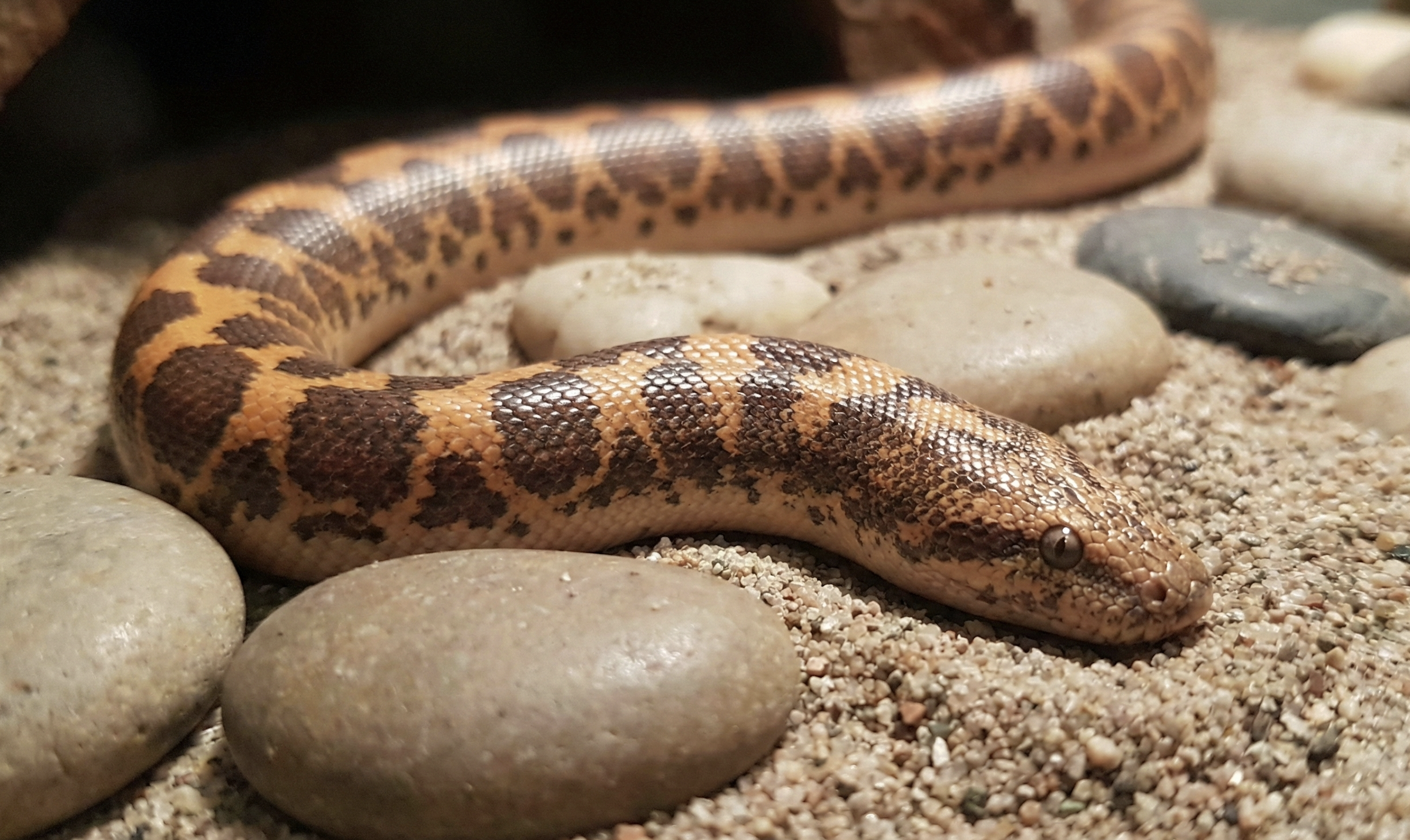
The Kenyan sand boa (Gongylophis colubrinus) is frequently ranked as one of the top five best snakes for beginners. Specifically, their small size and placid temperament make them an ideal entry point into the hobby. Furthermore, their care requirements are remarkably straightforward compared to high humidity tropical species. Consequently, they are less likely to suffer from common husbandry-related illnesses. Therefore, you should consider this species if you want a hardy, manageable pet. In fact, their reluctance to bite makes them exceptionally forgiving for new handlers.
What are the realistic lifespan and size expectations for a Kenyan sand boa
A Kenyan sand boa represents a significant long-term commitment. Specifically, these snakes can easily live for twenty to thirty years with consistent care. Furthermore, you must account for the dramatic size difference between the sexes. Consequently, females reach a maximum of twenty-four inches, while males often stay under fifteen inches. Therefore, this manageable size is a primary reason for their immense popularity. In fact, they are the perfect “apartment-sized” constrictor.
Why is substrate selection the most critical part of their care?
Choosing the correct substrate is the most misunderstood aspect of maintaining a Kenyan sand boa. Specifically, you must avoid pure sand because it causes fatal intestinal impaction if ingested during feeding. Furthermore, sand does not hold the structure of the tunnels these snakes require to feel secure. Consequently, shredded aspen shavings are the superior choice for burrowing. Therefore, you must provide a layer at least three to four inches deep. In fact, a hidden snake is a sign of a psychologically healthy animal.
What are the ideal temperature and humidity parameters?
These desert-dwelling animals require a distinct thermal gradient to digest their food and maintain health. Specifically, you must provide a hot spot between 90–95∘F (32–35∘C). Furthermore, you must connect your heat source to a thermostat to prevent lethal overheating. Consequently, the cool side of the habitat should remain in the mid-70s. Therefore, you should maintain low ambient humidity, as these snakes do not require supplemental misting. As a result, a dry environment prevents the development of respiratory infections.
Why does a Kenyan Sand Boa hide constantly?
Hiding is the natural and healthy state for a Kenyan sand boa. Specifically, they are ambush predators that feel most secure when completely submerged in their substrate. Furthermore, they utilize their wedge-shaped heads to navigate the subterranean environment. Consequently, an individual that is constantly roaming the surface is often showing signs of stress. Therefore, you should not worry if you rarely see your pet outside of feeding times. In fact, they are perfectly content as your “pet rock” beneath the aspen.
What is the safest way to feed a Kenyan Sand Boa?
In a captive environment, the diet of a Kenyan sand boa consists entirely of mice. Specifically, you should always offer frozen-thawed prey to eliminate the risk of injuries from live rodents. Furthermore, ensure the mouse is no wider than the thickest part of the snake’s body. Consequently, hatchlings usually eat once a week, while adults only require a meal every two to four weeks. Therefore, using feeding tongs is the safest way to present the prey to an ambush hunter. In fact, they strike with surprising speed from beneath the substrate.
How do you distinguish between males and females?
Beyond the obvious size difference in adults, you can identify males by their distinct cloacal spurs. Specifically, these are tiny, vestigial hind limbs located on either side of the vent. Furthermore, females possess much shorter, blunter tails compared to the tapered tails of the males. Consequently, these physical markers are the most reliable way to sex younger individuals. Therefore, understanding these anatomical differences is vital for any prospective breeder. In fact, this species is unique because it gives birth to live young.
My Experience

I once struggled with a profound fear of snakes. Specifically, I attended a reptile expo to confront this phobia directly. Furthermore, the Kenyan sand boa was the very first snake I ever agreed to hold. Its slow, calm movements and soft texture completely changed my perspective. Therefore, I was no longer afraid of these fascinating creatures from that moment forward. In fact, that single interaction led me to found Exotastic Earth. As a result, I now dedicate my life to the ethical care of these misunderstood burrowers.
Sources
- Reptiles Magazine
https://reptilesmagazine.com/kenyan-sand-boa-care-sheet/ - ReptiFiles
https://reptifiles.com/kenyan-sand-boa-care-sheet/ - Smithsonian’s National Zoo
https://nationalzoo.si.edu/animals/kenyan-sand-boa - Advancing Herpetological Husbandry
https://www.facebook.com/groups/AdvancingHerpetologicalHusbandry/ - Arcadia Reptile
https://www.arcadiareptile.com/lighting/creature-care/sand-boa/


Leave a Reply