
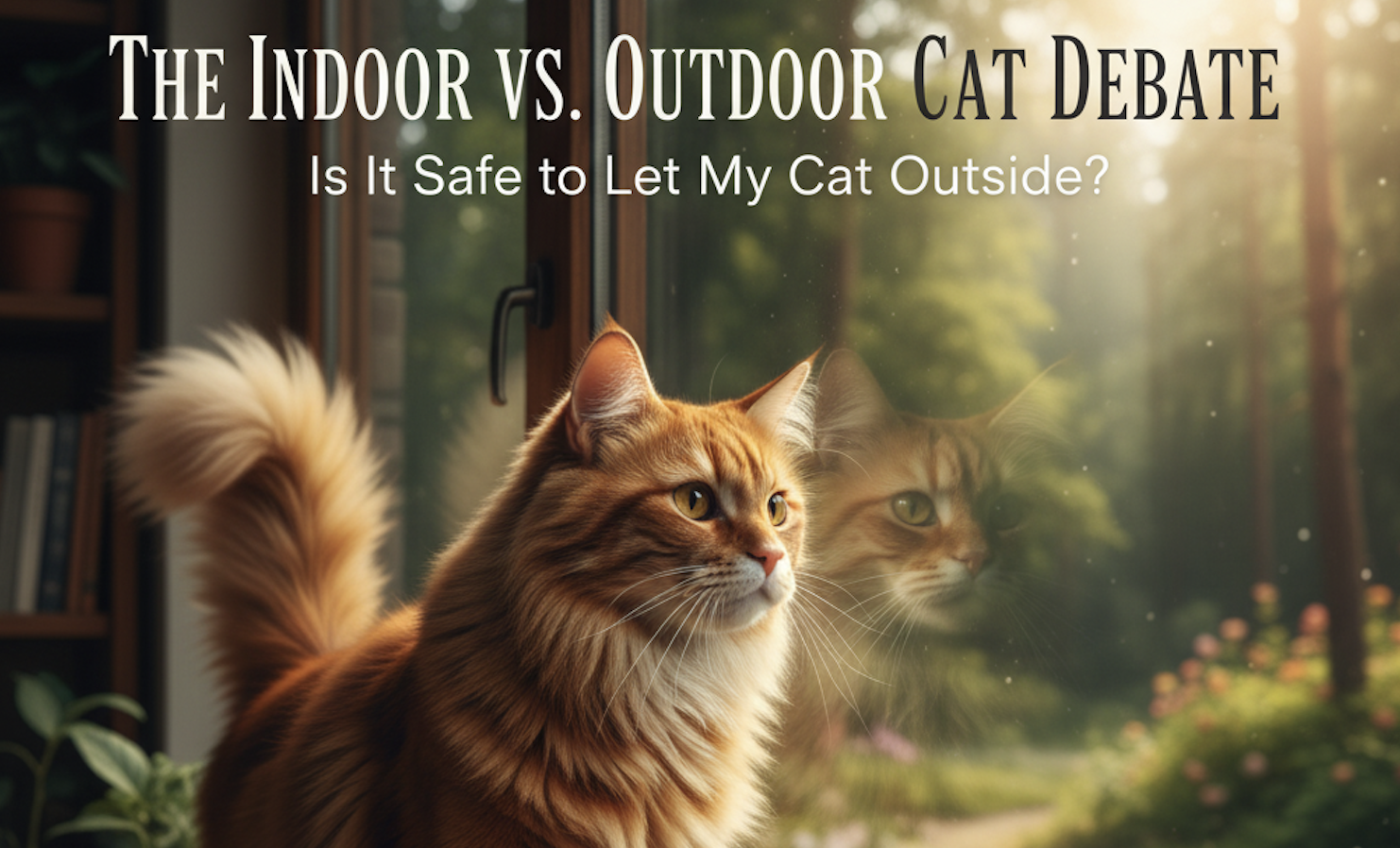
It is a question that cuts to the very heart of how we view our feline companions. For instance, you look at your cat, a creature of breathtaking grace and ancient, predatory instinct, as it stares longingly out the window. Immediately, a wave of guilt hits you. Is it cruel to keep this tiny panther confined to a house? In other words, are you depriving it of its natural, wild joy? This is the great and deeply emotional debate of cat ownership. However, the truth is, the decision to let your cat outside is not just a lifestyle choice; rather, it’s a profound and often life-or-death gamble. This guide, therefore,is an unflinching, detailed exploration of the realities, the risks, and the responsible alternatives.
The Retired Street Gang
My house is run by a furry, eight-member syndicate of retired street thugs. Every single one of my cats is a rescue, and in fact, many of them started their lives on the mean streets. They have seen things; they have stories. One of them has a notched ear from a long-forgotten street fight. Similarly, another has a lingering fear of loud noises. Now, however, they are the laziest, most pampered, and safest couch potatoes in the world. Consequently, they are never, ever going back to life as a cat outside.
I didn’t “tame” them; I retired them. They have a safe, permanent retirement home from a world that is incredibly dangerous for a domestic cat. I know some people will call this cruel, but having seen the real-world consequences firsthand, I call it a duty. This guide, therefore, is my argument for a safe and happy retirement.
Why Does My Cat Want to Go Outside So Badly?
The urge is powerful and instinctual. Your cat is a predator, meaning its brain is hardwired to be stimulated by the sights, sounds, and smells of the outside world. Consequently, they aren’t asking for “freedom”; instead, they are being drawn to the richest source of mental and sensory stimulation they know: the hunt, the chase, and the defense of territory.
What Are the Real, Unflinching Dangers of letting your cat outside?
This is not a list of possibilities; it is a list of inevitabilities. For an outdoor cat, it is not a matter of if they will face these dangers, but when.
Cars
This is the number one cause of premature death for a cat outside. Even on a quiet suburban street, a cat’s instinct to dart after prey or flee from a threat can be a fatal one.
Predators
Even in an urban environment, a domestic cat is part of a food chain, and it is not always at the top. Common predators include:
- Coyotes and Foxes: Increasingly common in suburban areas.
- Loose or Off-leash Dogs: A playful “shake” from a large dog can be instantly fatal to a cat.
- Large Birds of Prey: Such as hawks and owls.
Disease and Parasites
The outdoors is a reservoir of illness.
Incurable Diseases: Contact with feral or stray cats can lead to the transmission of fatal, incurable viruses like Feline Leukemia (FeLV) and Feline Immunodeficiency Virus (FIV).
Parasites: They will inevitably pick up fleas, ticks, ear mites, and intestinal worms.
Poisons: They are at risk from ingesting antifreeze (which has a sweet taste), rat poison, and toxic chemicals from treated lawns.
Getting Lost or Trapped
A cat outside can easily get disoriented and wander too far, or it can become trapped in a neighbor’s shed or garage.
Cruelty from Humans
This is a horrifying but real danger. Not everyone loves cats, and a free-roaming cat is a vulnerable target for cruelty.
What About the Environmental Impact?
This is the other side of the ethical coin. Domestic cats, even well-fed ones, are incredibly efficient, instinct-driven predators.
The Sobering Numbers: Studies have shown that free-roaming domestic cats are a top threat to global biodiversity. In the United States alone, outdoor cats are estimated to kill billions of wild birds and small mammals every single year.
It’s Not Their Fault: They are not killing for food; they are killing because it is their hardwired instinct. You cannot train it out of them. A bell on the collar is largely ineffective.
Debunking the Myths: Answering the Common Arguments
“But my cat is bored! Isn’t it cruel not to let my cat outside?”
It is not cruel to keep them safe. Rather, the solution for a bored cat is not a dangerous environment; it must be a better indoor environment. Consequently, the real solution is Indoor Enrichment. You must take on the responsibility to create a stimulating world inside.This includes:
- Vertical Space: Tall cat trees and window perches.
- Scratching Posts: Both vertical and horizontal.
- Interactive Play: Daily, active play sessions with a feather wand.
- Puzzle Feeders: To make them “hunt” for their food.
“But my cat has always been outside! It would be miserable inside.”
While the transition may be difficult, it is absolutely achievable and represents the kindest long-term decision. Consequently, owners must understand that the adjustment period can take weeks or even months of patience as the cat slowly adapts to its new, safer lifestyle indoors.
“I live in a safe, rural area. Wouldn’t that be safe to let my cat outside?”
Rural areas have more, not fewer, predators. Coyotes, foxes, and birds of prey are a much greater threat in a country setting than in a city.
The Verdict: The Science is Overwhelming
The consensus among veterinarians, humane societies, and conservation organizations is unanimous and unequivocal: for both the cat’s own safety and for the protection of local wildlife, pet cats should be kept indoors.
Consider the statistics: an indoor cat has an average lifespan of 15-20 years. In stark contrast, however, the average lifespan of a free-roaming outdoor cat is just 2-5 years. Clearly, the numbers speak for themselves.
How Can I Give My Cat Safe Outdoor Experiences?
You can have the best of both worlds!
Build a “Catio”: This is the gold standard. A catio is a secure, enclosed outdoor patio or “cat-patio” that allows your cat to experience the sights, sounds, and fresh air of the outdoors from a completely safe, protected space.
Leash and Harness Training: With patience, many cats can be trained to walk on a leash and harness, allowing for safe, supervised outdoor adventures.
Sources
- UC Davis Veterinary Medicine
https://healthtopics.vetmed.ucdavis.edu/health-topics/canine-and-feline/indoor-vs-outdoor-cats - Cornell Feline Health Center
https://www.vet.cornell.edu/departments-centers-and-institutes/cornell-feline-health-center/health-information/feline-health-topics/feline-leukemia-virus - Nature Communications
https://www.nature.com/articles/ncomms2380 - Pet Poison Helpline
https://www.petpoisonhelpline.com/poison/antifreeze/ - VCA Animal Hospitals
https://vcahospitals.com/know-your-pet/feline-enrichment-why-it-is-important


Leave a Reply